


Posted by Dean smith

The Moses basket arrives, the stand comes out of the box in what looks like eight separate pieces, and the baby is due in less than a fortnight. Most parents assume the setup is obvious, then spend twenty minutes staring at a screw wondering if it goes in the long hole or the short one. It does not feel like a life-or-death task. But in a very real sense, it is.
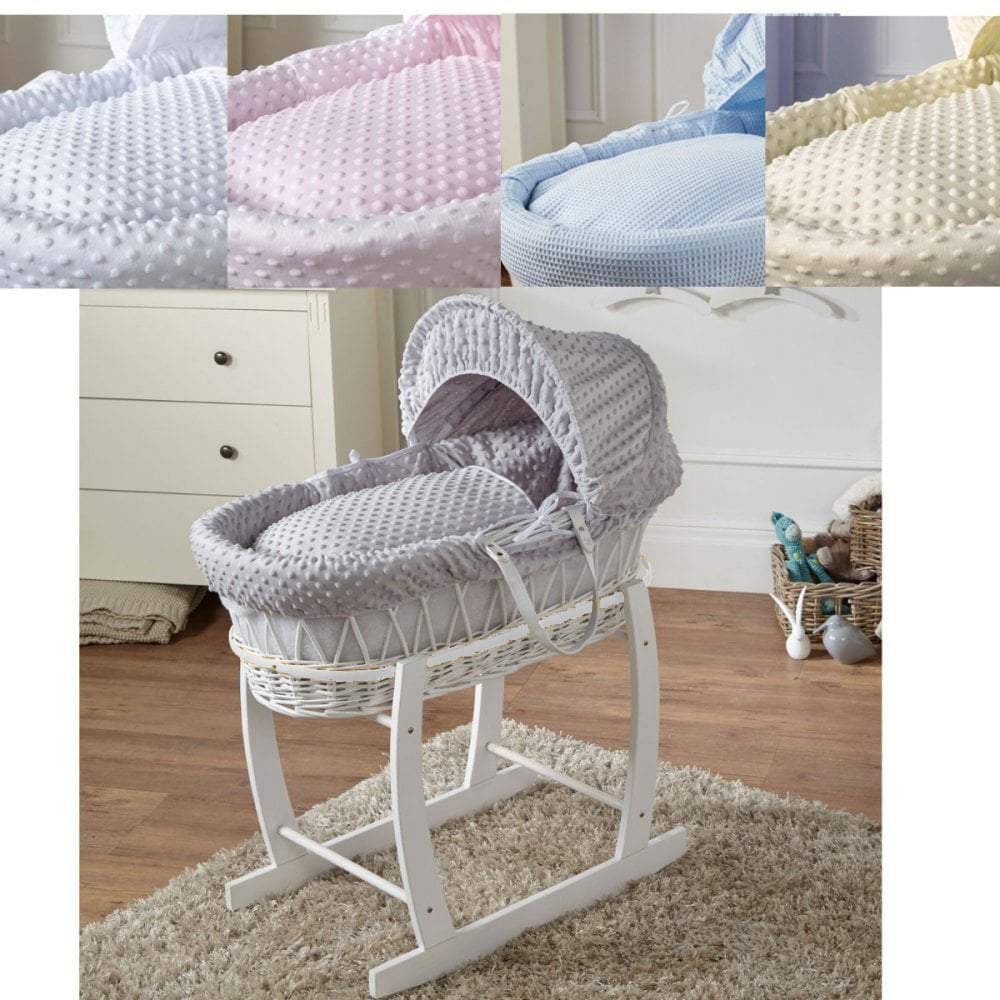
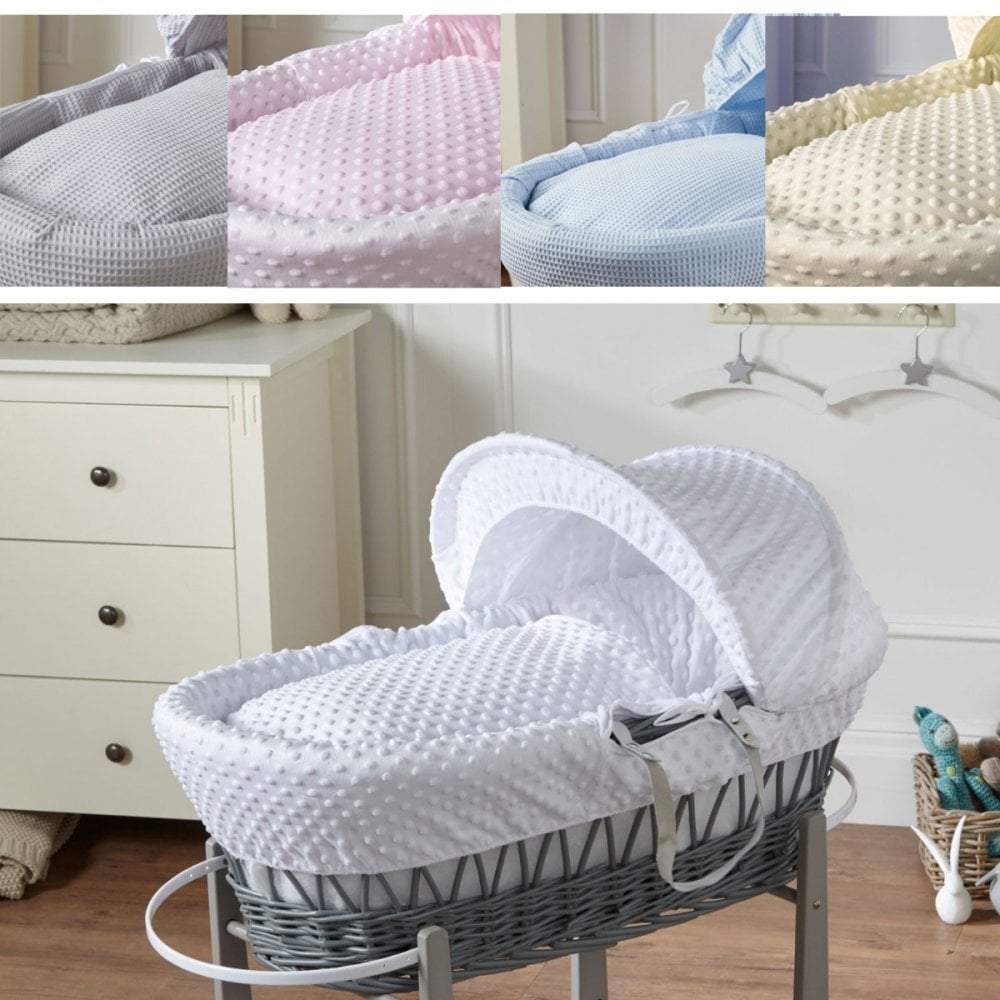
So, how do you set up a Moses basket safely, and what does "safely" actually mean in practice? The NHS links correct Moses basket setup directly to reducing the risk of SIDS. Ensuring the mattress fits correctly, assembling the stand properly, and positioning the basket in the right part of the room are not admin tasks you tick off and forget. They are the foundation of safe sleep from your baby's very first night at home. Whether you have just ordered one of our own-brand wicker or pod Moses baskets from For Your Little One, or you have been gifted one from a family member, this guide walks through every step clearly and completely.
We will cover how to inspect the basket before use, how to assemble the stand correctly, what the mattress fit should feel like, where to place the basket in the room, which bedding rules reduce SIDS risk, and when to recognise that your baby has outgrown it.
How do I set up a Moses basket safely? Start with a full inspection
Before anything else goes into the basket, the basket itself needs a proper check. This applies to brand-new baskets and, especially, to ones that have been handed down.
The British Safety Standard every basket should meet
Look for compliance with BS EN 1466:2014 (or the updated BS EN 1466:2023, both are acceptable) on the packaging, product listing, or instruction manual. This standard requires a firm, flat mattress that fits snugly, breathable sides, a stable stand, and structural integrity under the weight of a baby up to 9 kg. It is voluntary rather than legally enforced, but it is the clearest signal that a basket has been designed and tested with infant safety in mind. All Moses baskets sold by For Your Little One carry this certification, so if you have purchased from us, that part is already confirmed.
How to inspect a gifted or second-hand basket
Run your hands around the full circumference of the weave. You are looking for splits, loose strands, or sections where the wicker has begun to separate. Check the handles where they attach to the body of the basket: the stitching or binding here takes the most stress and is the first place wear shows. A musty or damp smell is a reason to stop entirely, as mould in natural fibre cannot be fully removed. Confirm that the original stand, not a substitute, is included, and check whether the original mattress is present and undamaged, because Moses basket mattresses are sized to their specific basket.
When buying new: what a complete set looks like
A correctly specified new Moses basket comes with a correctly sized mattress included, breathable wicker or rope construction, and a compatible stand sold as part of the set. Buying everything as a matched set removes the risk of mismatched components, for instance, a mattress from a different brand that is 1, 2 cm narrower than the basket interior, which can compromise both safety and stability. Our wicker Moses basket range at For Your Little One includes all three elements as standard.
How to assemble your Moses basket stand safely
The stand is where the majority of setup errors happen. A stand that looks assembled but has one leg oriented incorrectly, or screws that are only hand-tight, is not a safe surface for a sleeping baby.
Static stand vs rocking stand: know the difference before you build
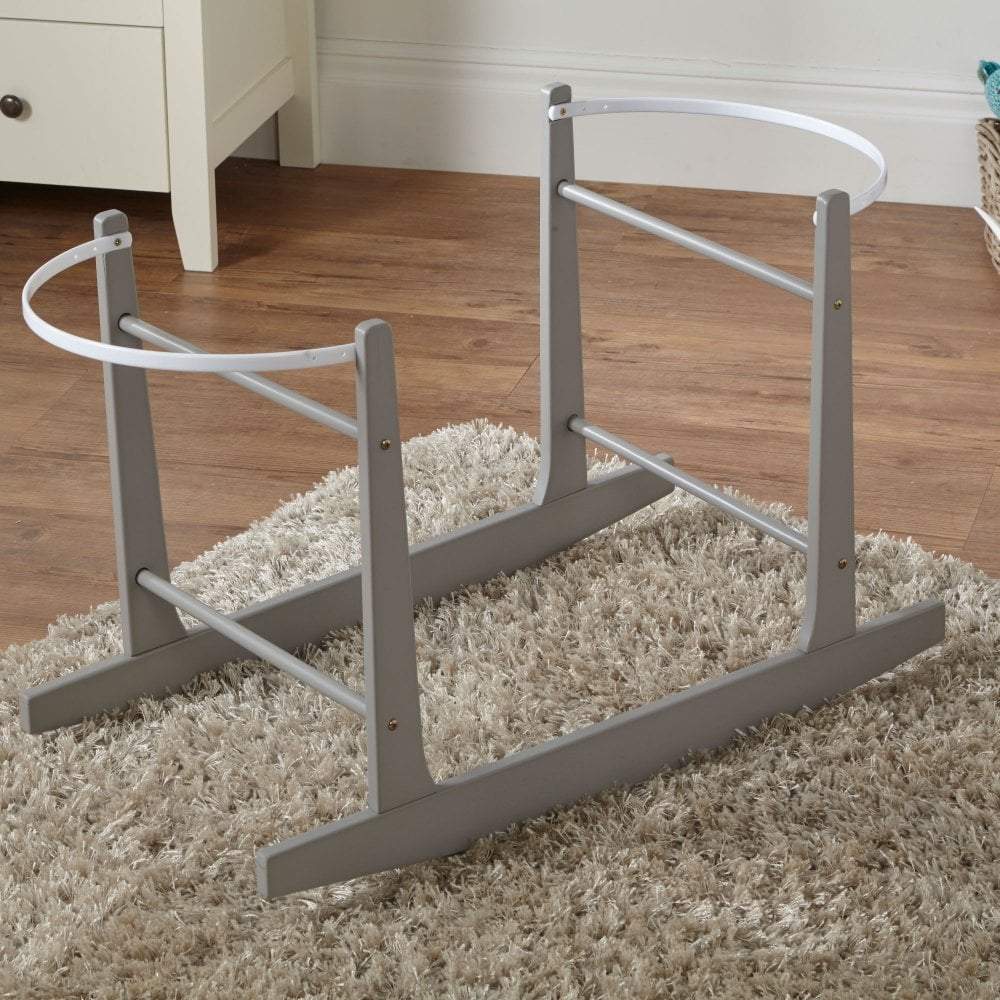
Static stands have straight base rails and sit level on the floor without movement. Rocking stands have curved base rails that allow gentle movement, and they also have a locking mechanism that holds the stand still when rocking is not wanted. Both require careful assembly, but the rocking stand has one additional step: confirming that the lock engages and releases correctly before you place the basket on it. If the lock does not engage cleanly, do not use the stand until you have checked the assembly against the manual. If you prefer a visual walkthrough, watch this assembly video before you start.
Step-by-step assembly: the steps most manuals under-explain
The general sequence runs as follows: orient the legs correctly with angled edges facing outward and large holes facing inward (on most stand designs, check your included manual if yours differs); attach the legs to the support bar using the correct screw length for that fixing point; secure the curved or straight base rails to the legs; install the cross rails and frame slats; fit the end restraints using the shorter screws specified for that step. The two points where parents most commonly go wrong are using the wrong screw length at a given fixing point and not checking that the legs are oriented correctly before tightening anything. Check all screws again after the first 48 hours of use, as fixings on a new piece of furniture settle and can loosen slightly with initial movement, and consult our Moses Basket Safety Tips Every Parent Should Know for a quick checklist.
The pre-use stability check every parent should do
Place the fully assembled stand on a firm, level floor. Apply gentle downward pressure to the centre of the support bar and confirm there is no wobble or flex. A static stand should not move at all. Always lift the stand to reposition it rather than dragging it, as dragging stresses the joint connections. Never carry the basket with your baby inside while it is sitting on the stand.
Getting the mattress fit and firmness right
A mattress that does not fit the basket snugly is one of the most common and most preventable infant sleep hazards. The gap between the mattress edge and the basket wall matters far more than most parents realise.
Standard Moses basket mattress dimensions and why fit matters
The standard mattress for a traditional wicker Moses basket measures 74 cm long by 28 cm wide and approximately 3 cm thick. Pod and palm-style baskets often use a shorter mattress, typically around 65 cm, so the specific basket always determines the correct mattress size. Use the two-finger rule to check fit: if you can slide more than two fingers between the mattress edge and the basket wall on any side, the mattress is too small and the basket is not safe to use. The mattress must be matched to the specific basket, not just labelled as a generic Moses basket size.
Why firmness is non-negotiable
A firm mattress should not indent under your baby's weight, and should spring back immediately when you press it with your palm. Soft mattresses allow a newborn's head to sink, which restricts airflow around their face and raises SIDS risk. If you are replacing a mattress on an older basket, always buy new rather than reusing one, even if the existing mattress looks undamaged. Mattress foam and fibre compress over time in ways that are not visible to the eye.
Breathable materials and what to use for bedding
Look for mattresses with a hypoallergenic fibre core that includes air channels for breathability, rather than a solid foam block. For fitted sheets, cotton jersey, bamboo, and muslin all regulate temperature well and wick moisture from your baby's skin. Avoid synthetic fabrics and anything padded or quilted. For Your Little One stocks fitted sheets in breathable cotton sized to fit our Moses basket mattresses, so they stay snug through the night rather than bunching at the edges; you can read more in Essential Moses Basket Safety Guidelines I Trust.
Positioning the basket and managing room temperature
Where the basket sits in the room, and what temperature that room is kept at, directly affects your baby's risk of overheating.
The same-room rule for the first six months
NHS guidance is clear: your baby should sleep in the same room as you for the first six months, day and night. This is one of the most effective ways to reduce SIDS risk, and it is one of the reasons a Moses basket is such a practical choice for the newborn stage. It is portable and compact enough to sit beside your bed overnight and move to the living room for daytime naps, keeping your baby close without requiring a separate nursery setup from day one. For the official recommendations see the NHS baby safe sleeping guide.
Room temperature: the 16, 20°C target and how to monitor it
The recommended room temperature for infant sleep is 16, 20°C. A simple digital room thermometer placed at the same height as the basket, away from windows, radiators, and any heat source, gives you an accurate reading of the temperature your baby is actually experiencing. In summer, a fan circulating air around the room helps, but it should never point directly at the baby. In winter, set central heating on a timer rather than leaving it running overnight, as a room consistently above 20°C is too warm for safe infant sleep.
Where not to place the basket
Keep the basket away from radiators, windows with direct sunlight, and draughty doorways or external walls. As noted during the stability check, the stand must always sit on a firm, level floor where all four legs make full contact with the surface, never on a bed, sofa, table, or any other raised surface.
Bedding rules that reduce the risk of SIDS
What goes inside the basket is just as important as how it is set up. The NHS guidelines on Moses basket bedding are specific, and they exist for good reason.
The feet-to-foot position explained
Place your baby so their feet touch or nearly touch the foot end of the basket, with their head well away from the top edge. This is called the feet-to-foot position, and it prevents your baby from wriggling downwards under any blanket during sleep. If you are using a lightweight blanket, tuck it firmly under the mattress sides and keep it no higher than your baby's armpits. It should not be able to work loose and ride up over their face.
What to remove from the basket entirely
No pillows. No duvets. No cot bumpers. No soft toys. No nest-style inserts, sleep pods, or positioners. These items are not safe for infant sleep regardless of how they are marketed. The basket should contain only the mattress, a correctly fitted sheet, and your baby. This is not cautious parenting, it is the NHS recommendation, backed by decades of SIDS research.
Baby sleeping bags as a safer alternative to blankets
A well-fitted baby sleeping bag in the correct tog removes the need for loose blankets entirely, which many parents find reassuring once they make the switch. For rooms at the recommended 16, 20°C, a 2.5 tog bag is appropriate year-round. In warmer rooms between 20, 24°C, a 1.0 tog is sufficient. Your baby's head should always remain uncovered, and any hat worn during a journey home or in a cold car should come off as soon as you are indoors. For guidance on choosing the right tog and fit, see this practical baby sleeping bag guide.
Knowing when your Moses basket has done its job
A Moses basket is designed for the newborn stage, not for ongoing use as your baby grows and becomes more physically capable.
Weight limits, length, and the physical signs to watch for
Most Moses baskets, including those sold by For Your Little One, carry a weight limit of 9 kg, which corresponds roughly to 3, 4 months of age for an average baby. Beyond weight, watch for your baby's head or feet consistently reaching the basket ends, signs of cramping or restlessness during sleep, and any rocking or rolling movements that shift their position noticeably. Any of these is a signal that the basket has been outgrown, regardless of the weight figure. For further reading on how long a baby can sleep in a Moses basket, see this practical guide.
Rolling and mobility: the sign that cannot wait
Once your baby begins to roll, the Moses basket is no longer safe, full stop. The woven sides are not designed to contain a mobile infant, and a baby who rolls can press their face directly into the weave. This is not a transition to plan gradually over a few weeks. When rolling begins, the move to a cot happens immediately.
Making the change to a cot easier for your baby
Start with daytime naps in the cot so your baby adjusts to the larger space before the overnight transition. Keep the room conditions as consistent as possible: same temperature, same light level, same sleep cues such as feeding, dimming lights, or white noise if you use it. The sleep associations your baby has built up in the Moses basket transfer well to a cot when the surrounding routine stays the same.
A final word before the basket goes beside the bed
If you have been asking yourself how do I set up a Moses basket safely, the reassuring answer is that it is genuinely straightforward once you understand what each step is actually for. Begin by confirming BS EN 1466 compliance and checking the basket structure. Assemble the stand on a firm, level floor and re-check all screws after 48 hours. Fit a firm, snug mattress using the two-finger rule, and dress it with a breathable fitted sheet. Keep the room at 16, 20°C and use the feet-to-foot position with minimal bedding. Finally, watch for the transition signs, around 9 kg or as soon as rolling begins, so you know when to move your baby to a cot. Each step connects directly to your baby's safety, which makes none of them optional.
If you are still choosing a basket or need to replace a mattress or add fitted sheets, our Moses basket range at For Your Little One covers wicker and pod styles, complete with certified mattresses and breathable cotton bedding to match. Everything ships with same-day dispatch on orders placed before 2:30 pm, and delivery is free on orders over £49.99. If you are weighing up sleep options, read Moses Basket vs Bassinet: Which is Safer for Newborns? | For Your Little One to help you decide. Browse the full range at For Your Little One and get everything ready before your baby comes home.
