


Posted by Dean smith


When comparing a Moses basket vs bassinet to decide which is safer, the answer depends on more than appearances. Both are small, soft-sided sleeping spaces designed for newborns. Both sit beside your bed in those tender early weeks. Yet when parents start researching the question seriously, they discover real, substantive answers rooted in construction, compliance, and how each product is used in everyday family life.
The anxiety around newborn sleep safety is completely understandable. According to the Lullaby Trust, sleep-related deaths are among the most significant causes of infant mortality in the UK, and the guidance from the NHS and the Lullaby Trust exists for good reason. This article cuts through the marketing noise and gives you a standards-backed comparison of both product types, covering structural differences, UK safety requirements, mattress rules, age and weight limits for bassinets and Moses baskets, and the hazards that catch parents off guard.
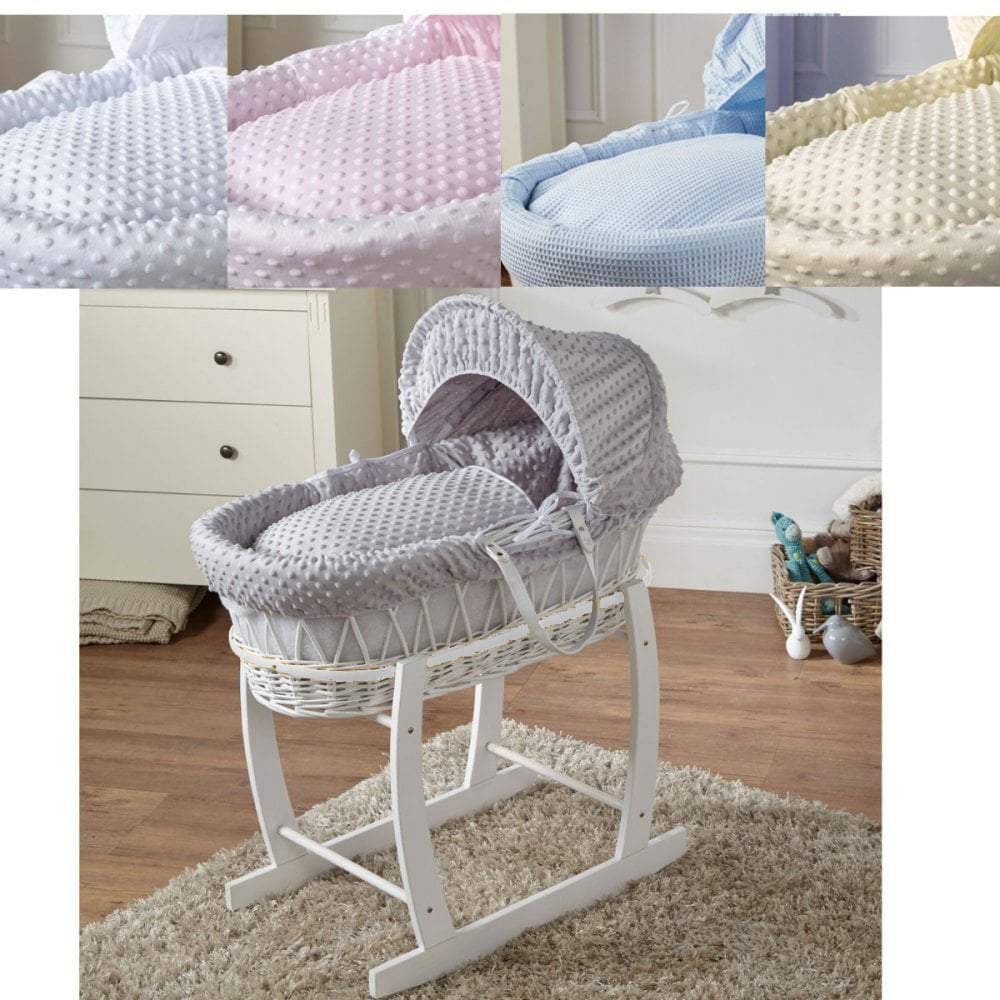
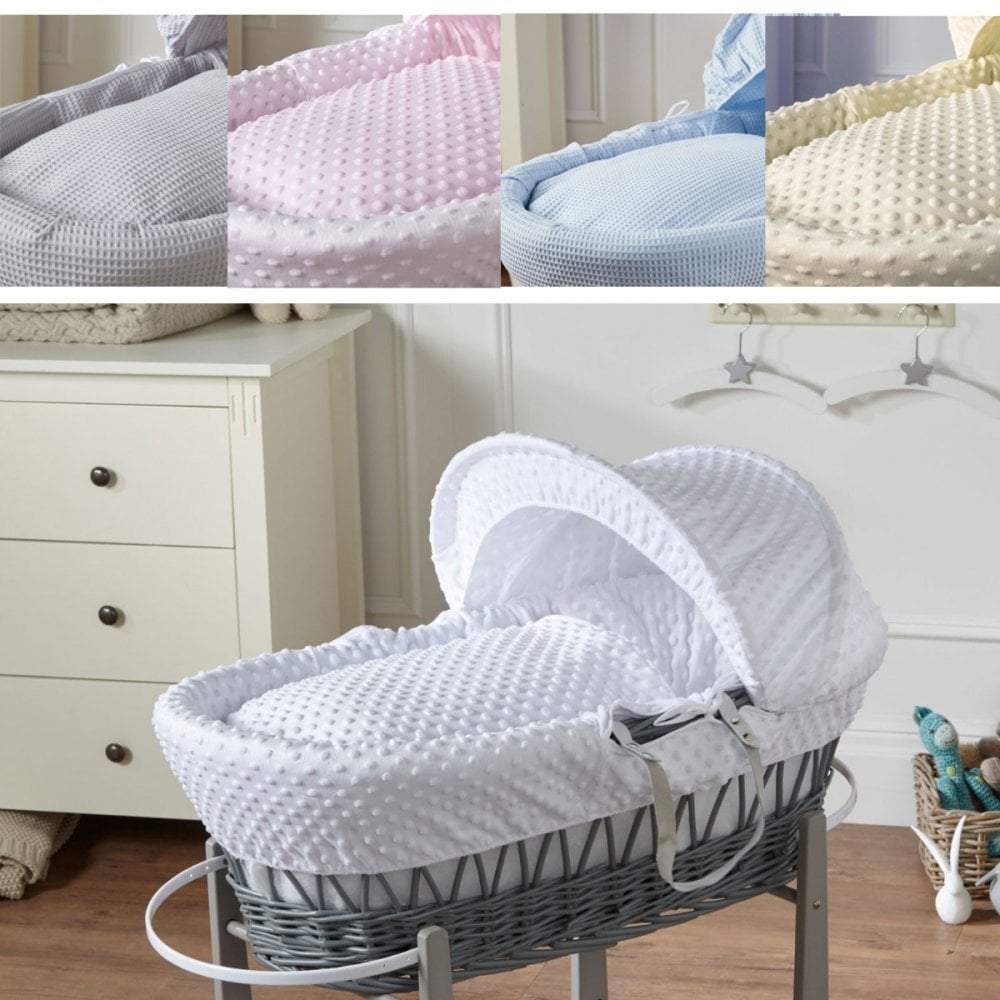
To ground this in something concrete, the Moses basket range at For Your Little One includes both classic wicker styles and pod Moses baskets, each designed to align with UK safe sleep guidance. These are the kinds of real-world products we'll refer back to throughout, because abstract safety talk is far more useful when you can picture what a compliant option actually looks like.
Moses basket vs bassinet: which is safer, key structural differences
A Moses basket is a portable, woven or fabric basket with fixed shallow sides and carry handles. Traditional versions are made from wicker or maize; modern alternatives use padded fabric in a pod shape. A bassinet is a purpose-built unit with a rigid frame, legs or a rocker base, and sides typically made from mesh or fabric. Both are primarily intended for early infancy, though some bassinets may be suitable slightly beyond the newborn stage depending on manufacturer age and weight limits, and their construction creates meaningfully different safety profiles.
The portability of a Moses basket is its defining feature and its primary risk factor. Carrying a sleeping baby from room to room introduces hazards around floor placement, uneven surfaces, and the remote but real possibility of a drop. Bassinets are stationary and elevated, which removes floor-level risks but introduces stand stability concerns and the potential for a frame failure at height. Portability is a feature, not a flaw, but it demands specific practices covered below.
Traditional wicker construction allows natural breathability through the weave. Pod-style Moses baskets rely more heavily on internal lining quality and mattress firmness to create a safe sleep surface. Bassinets typically use mesh side panels to maximise airflow, which is a meaningful safety benefit for enclosed sleep spaces. Neither material is inherently safer than the other, as the Lullaby Trust emphasises, mattress firmness and a clear sleep space are the primary safer-sleep factors. What genuinely matters is that the sleep surface is firm, flat, and correctly fitted.
UK safety standards every parent must check before buying
Moses baskets and carry cots sold in the UK should comply with BS EN 1466:2014 or the updated BS EN 1466:2023. This standard covers structural integrity, material safety, maximum load capacity, and mattress fit requirements. A product that genuinely meets it will state the exact standard number on the label, packaging, or product instructions; vague phrases like "safety tested" or "meets safety standards" are not the same thing and should not satisfy you.
How to verify BS EN 1466 compliance
To verify compliance, check the product label or instruction manual for the exact BS EN standard number. For stronger evidence than a label claim, request a Declaration of Conformity from the retailer or manufacturer. One note of caution: some products cite ASTM F2194, which is a US standard. It may indicate quality testing, but it is not a substitute for BS EN 1466 and does not constitute UK certification.
The NHS and the Lullaby Trust both confirm that Moses baskets and bassinets are acceptable for overnight newborn sleep, provided the sleep space is flat, firm, clear, and separate, with the baby in the same room as a caregiver for at least the first six months. The Lullaby Trust explicitly warns against inclined, seated, or soft sleep surfaces, and against any product designed to keep a baby in one position. This rules out nest-style inserts, positioning wedges, and shaped pod liners used inside any basket or bassinet. The NHS feet-to-foot rule applies to both product types: baby on their back, feet at the bottom of the basket, with any tucked-in blanket kept lightweight.
For guidance tailored to early years settings and practitioners, see the EYFS safer-sleep requirements, which clarify expectations for childcare environments and how they align with family-focused safer-sleep advice.
Breathability, firmness, and what makes a safe sleep surface
Regardless of which product type you choose, the most important safety factor is the mattress. It must be firm, flat, and correctly fitted with no gaps at the edges. A soft or padded sleeping surface increases suffocation risk, particularly for newborns who cannot reposition their head if they shift during sleep. This is why mattress replacement on second-hand products is strongly advised: worn foam, compressed padding, and poor-fitting replacements all compromise the firmness that makes a sleep surface safe.
Mesh-sided bassinets may help improve airflow around a sleeping baby and can reduce the build-up of exhaled air in the sleep space; reviews of available models highlight how design choices affect airflow and safety considerations for parents choosing a bassinet. For a consumer-facing evaluation of bassinet designs and safety features, see independent testing and reviews of safe sleep bassinets.
Wicker Moses baskets also allow natural ventilation through the weave, though the internal lining must not obstruct that airflow significantly. Pod-style Moses baskets use a shaped, padded structure that is comfortable and visually appealing, but the internal surface must still be firm and the sides must not press against the baby's face if they shift during the night.
Nothing extra belongs inside the basket or bassinet. Pillows, rolled towels, cot bumpers, positioning nests, soft toys, and loose blankets all create suffocation and entrapment hazards. The NHS and the Lullaby Trust are unambiguous on this point: a safe sleep space is a clear sleep space. A correctly fitted sheet over a firm mattress is the complete setup; everything else adds risk, not comfort.
There is a body of research that supports these safer-sleep recommendations and the relationship between bedding, soft surfaces, and infant thermal and respiratory risks; for detailed scientific context see this published study on infant sleep risk factors.
Age and weight limits: knowing when each option stops being safe
When to move to a cot
Most Moses baskets are designed for use from birth to approximately three to six months, with typical weight limits around 9 kg (roughly 20 lb), though this varies by product and must always be confirmed in the product instructions. Always check the specific limits for your chosen product on the label or manufacturer's guidance. The weight limit is not the only trigger for moving on. If a baby can roll, push up on hands and knees, or sit up unaided, the basket is no longer safe regardless of what the scales say. Exceeding either limit risks the structural integrity of the basket and significantly increases the chance of a fall or entrapment.
Age and weight limits for bassinets are broadly similar, though some elevated or bedside models specify slightly different thresholds, always check the manufacturer's instructions for your specific product. Mobility milestones override age and weight limits here too. A rolling baby in any elevated bassinet creates a serious fall hazard, and bedside bassinets with a lowered or open side require particular vigilance once a baby becomes mobile: the open panel that makes night feeds easier also removes a physical barrier at the most critical moment.
The safest principle is straightforward: move to a full-sized cot as soon as any limit is reached, whether that is weight, age, or the first sign of rolling. Do not wait until all three criteria are met simultaneously. The NHS room-sharing recommendation for the first six months continues after the transition; the baby moves to a cot, not to a separate room.
The hazards that catch parents off guard
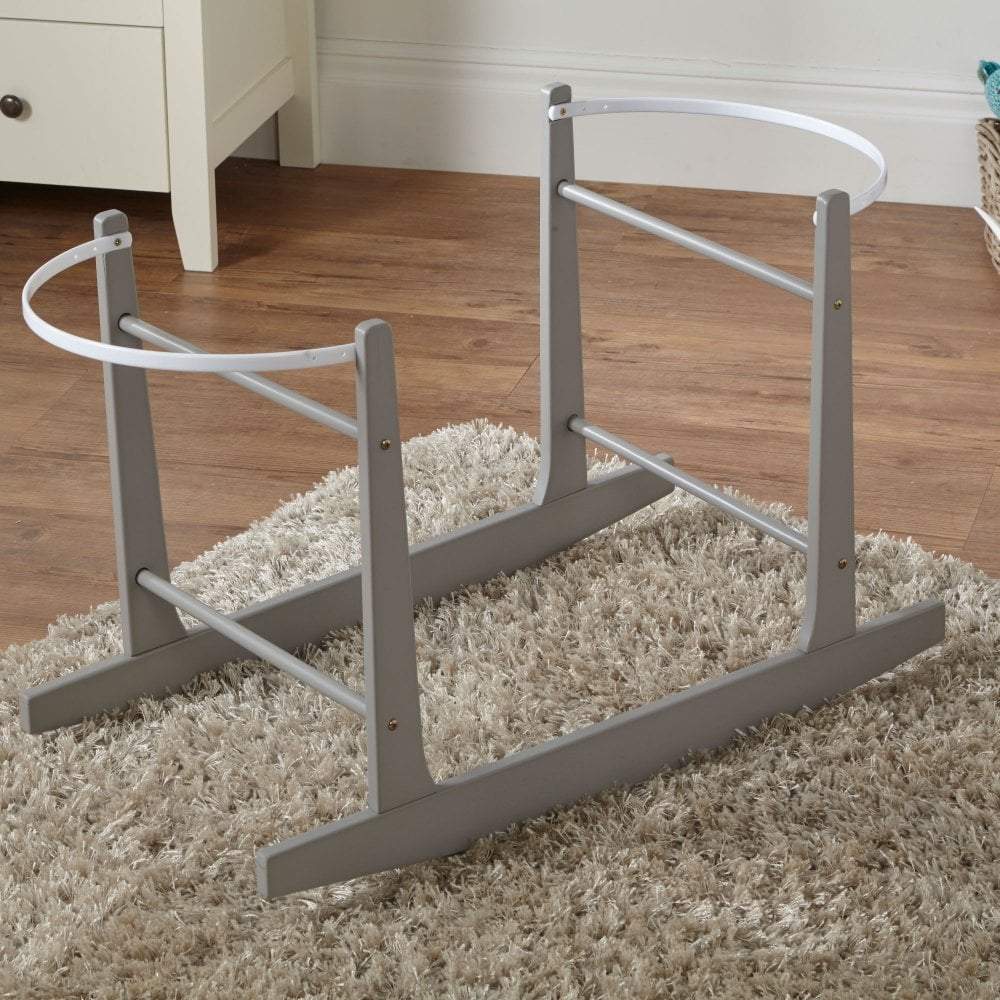
Bassinet stands are a documented failure point. Tipping, buckling legs, and loose locking mechanisms have been linked to product recalls and infant injuries, check GOV.UK product safety recall notices for current information on specific models. When assessing a bassinet, confirm the stand locks securely, has a wide stable base, and has not been repaired with non-original parts. For Moses baskets, the equivalent hazard is placement: never put a Moses basket on a raised surface such as a table, sofa, or bed. Floor placement, or a dedicated stand designed for that specific basket, is the only safe option.
In wicker Moses baskets, loose or broken wicker strands can create entrapment and laceration risks. Inspect the interior lining and weave regularly, especially with older or second-hand items. In bassinets, entrapment risks arise at the mattress edges if the mattress does not fit correctly, leaving gaps where a baby's limb or head could become trapped. A UK recall for a Moses basket cited waist straps that formed a loop exceeding the permitted length, creating a serious strangulation risk, a clear reminder that even purpose-built infant products can carry significant hazards when design standards are not met.
Second-hand products deserve particular scrutiny. A pre-owned basket or bassinet may have been subject to a product recall, structurally compromised through use, or had its mattress replaced with a non-compliant alternative. Check the product name and model number against current UK product safety recall notices on GOV.UK before using any second-hand item. A new, compliant mattress is the minimum requirement; the frame should also be inspected for cracks, loose joints, and missing components before a baby sleeps in it.
Which is the safer choice for your newborn?
Weighing up a Moses basket vs bassinet and which is safer ultimately comes down to your household's needs alongside how carefully each product is set up and maintained. A Moses basket suits families who need flexibility across the home. It can travel between rooms, sit safely on the floor, and be used without a stand during the early weeks. For compact living spaces and parents who want a sleeping newborn close during the day, a well-constructed wicker or pod Moses basket that meets BS EN 1466 is a practical and safe choice. The key requirements are a firm, correctly fitted mattress, placement on a flat stable surface, and a completely clear sleep space.
A bedside bassinet is particularly useful for parents who find lifting from floor level physically difficult in the early postpartum weeks, for example, those recovering from a caesarean section. The elevated, stationary design removes some floor-level risks, and mesh side panels may help with airflow. The trade-offs are stand stability risk and reduced portability; these do not make bassinets less safe overall, but they do require careful assembly and regular structural checks throughout the period of use.
For families considering a Moses basket, browsing the range at For Your Little One gives a clear sense of the wicker and pod styles available. Before purchasing, verify BS EN 1466 compliance by requesting the exact standard number on the label or a Declaration of Conformity, and confirm that a firm, fitted mattress is included. Apply the same due diligence to any bassinet you consider from any retailer.
If you are also shopping for practical accessories to use during transfers or outings, consider a cosy footmuff to keep newborns warm in the pushchair, for example, the Bebe Confort Footmuff / Cosy Toes or the GB Footmuff / Cosy Toes. These items complement a safe sleep setup at home by helping keep baby comfortable during short transfers but are not a substitute for a clear, firm sleep surface when the baby is put down to sleep.
The verdict: safety is in the setup, not the label
When comparing a Moses basket vs bassinet and which is safer, neither wins outright as a category. Safety comes from construction quality, standards compliance, correct setup, and using the product within its stated limits. The choice between them is largely one of lifestyle fit, and both can provide a genuinely safe sleep environment for a newborn when used correctly.
Three non-negotiables apply to both: a firm, flat mattress that fits with no gaps; a completely clear sleep space with no soft inserts, loose bedding, or positioning devices; and the same room as a caregiver for at least the first six months, in line with NHS and Lullaby Trust infant sleep guidelines. Before purchasing either product, check for BS EN 1466 compliance by looking for the exact standard number on the label or instructions, inspect for structural integrity, and plan to move your baby to a full-sized cot as soon as any weight, age, or mobility limit is reached.
Armed with this information, you can make the right call for your newborn's sleep safety with confidence, whether that means a classic wicker basket on the bedroom floor or a mesh-sided bassinet pulled up close to your bed at night.
Frequently asked questions
Is a Moses basket or bassinet safer for a newborn?
Neither is categorically safer. Both can be safe when they meet BS EN 1466, are fitted with a firm flat mattress, and are used within the manufacturer's stated age and weight limits. The setup and maintenance matter far more than the product type.
What UK safety standard should I look for on a Moses basket?
Look for BS EN 1466:2014 or BS EN 1466:2023 stated explicitly on the label or in the product instructions. Vague phrases such as "meets safety standards" are not sufficient. You can also request a Declaration of Conformity from the retailer or manufacturer.
How long can a baby sleep in a Moses basket?
Most Moses baskets are designed for use from birth to around three to six months, with typical weight limits of approximately 9 kg, though this varies by product. Always check your specific product's instructions. Move your baby to a full-sized cot as soon as any weight, age, or mobility limit is reached, whichever comes first.
Can I use a second-hand Moses basket or bassinet?
Use caution with second-hand sleep products. Check the model against current GOV.UK product safety recall notices, inspect the frame thoroughly for damage, and always replace the mattress with a new, correctly fitted one that meets the product's specifications.
What does bedside bassinet UK guidance say about room-sharing?
The NHS and the Lullaby Trust recommend that babies sleep in the same room as a caregiver for at least the first six months, whether in a Moses basket, bassinet, or cot. A bedside bassinet keeps the baby close without sharing a sleep surface, which aligns with safer-sleep guidance.
