


Posted by Dean smith

Newborn sleep options compared, it's one of the most searched topics for expectant parents in the UK, and for good reason. You've read the forums. You've asked the group chat. You've compared products until your browser tabs multiplied beyond reason, and you're still not entirely sure where your newborn should sleep. Every family seems to have a strong opinion, and every product claims to be the safest on the market.
Cutting through the noise becomes much easier when you go back to what the evidence actually says: what UK safety guidelines recommend, what product standards require, and what the research shows about each option. At For Your Little One, we've been helping parents navigate exactly these decisions since 2011, and questions around newborn sleep arrangements come up more than almost any other topic.
This article gives you an honest, side-by-side look at every major newborn sleep option, covering safety standards, practical fit for different homes, how long each option lasts, and what you can expect to pay. By the end, you'll have everything you need to make a confident, well-informed choice for your family.
What UK safety guidelines say about infant sleep
Before comparing any specific product, it helps to understand the framework everything else sits within. The NHS and the Lullaby Trust are consistent on this point: your baby should sleep in their own clear, flat, separate sleep space in the same room as you for the first six months, both day and night. This applies to every nap and every overnight sleep. Room-sharing with a separate sleep surface reduces the risk of Sudden Infant Death Syndrome (SIDS) by around 50%, according to Lullaby Trust guidance, making it one of the single most impactful things you can do.
"Room-sharing without bedsharing" means your baby is within arm's reach but on their own surface, not on your mattress. You can hear them, reach them quickly, and respond to feeding cues without either of you being in the other's sleep space.
What a safe sleep space looks like in practice
Regardless of which product you choose, a safe sleep space always has the same core features. The mattress must be firm, flat, and waterproof, fitting precisely with no gaps at the sides. Your baby should be placed on their back every single time, in a completely clear environment, no pillows, duvets, bumpers, or soft toys.
Room temperature should sit between 16 and 20°C, and your baby should be positioned with their feet at the foot of the sleep surface so they cannot wriggle under any covers. These requirements apply equally whether you choose a Moses basket, a cot, or a bedside sleeper.
Newborn sleep options compared: Moses baskets and bassinets
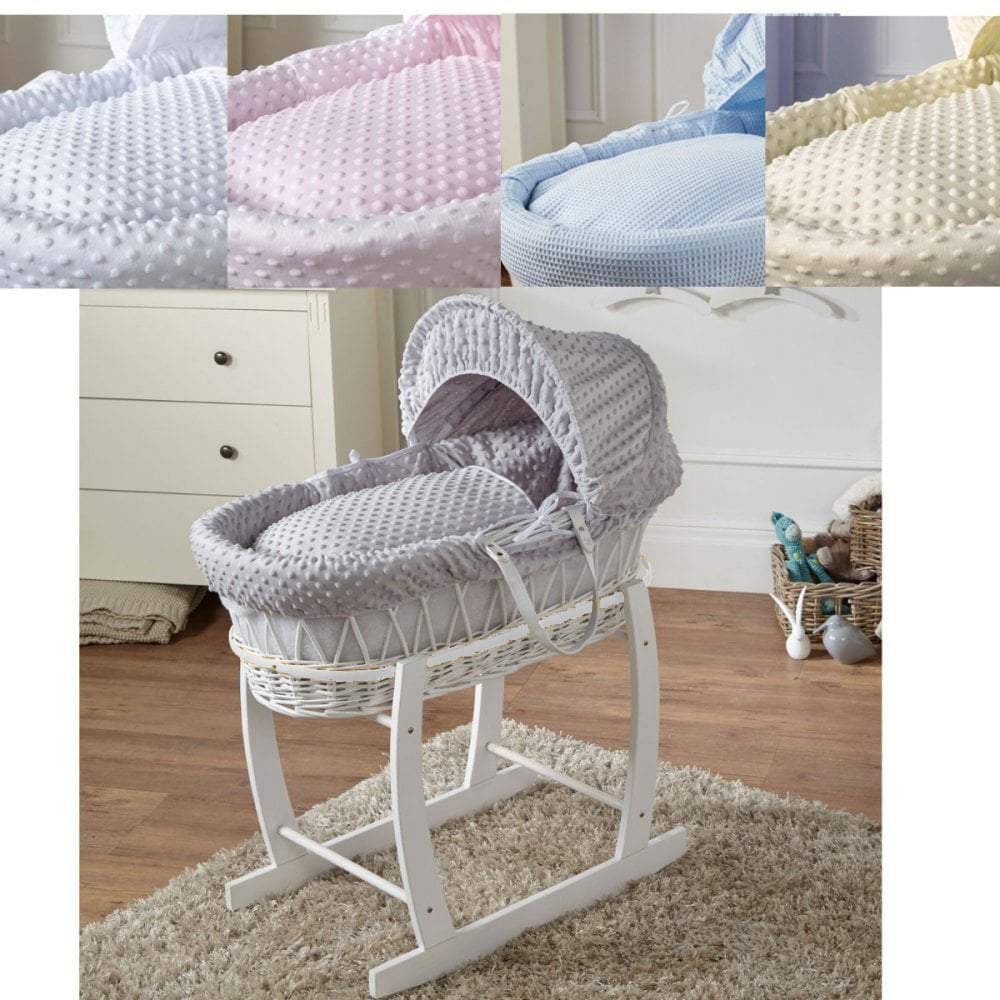
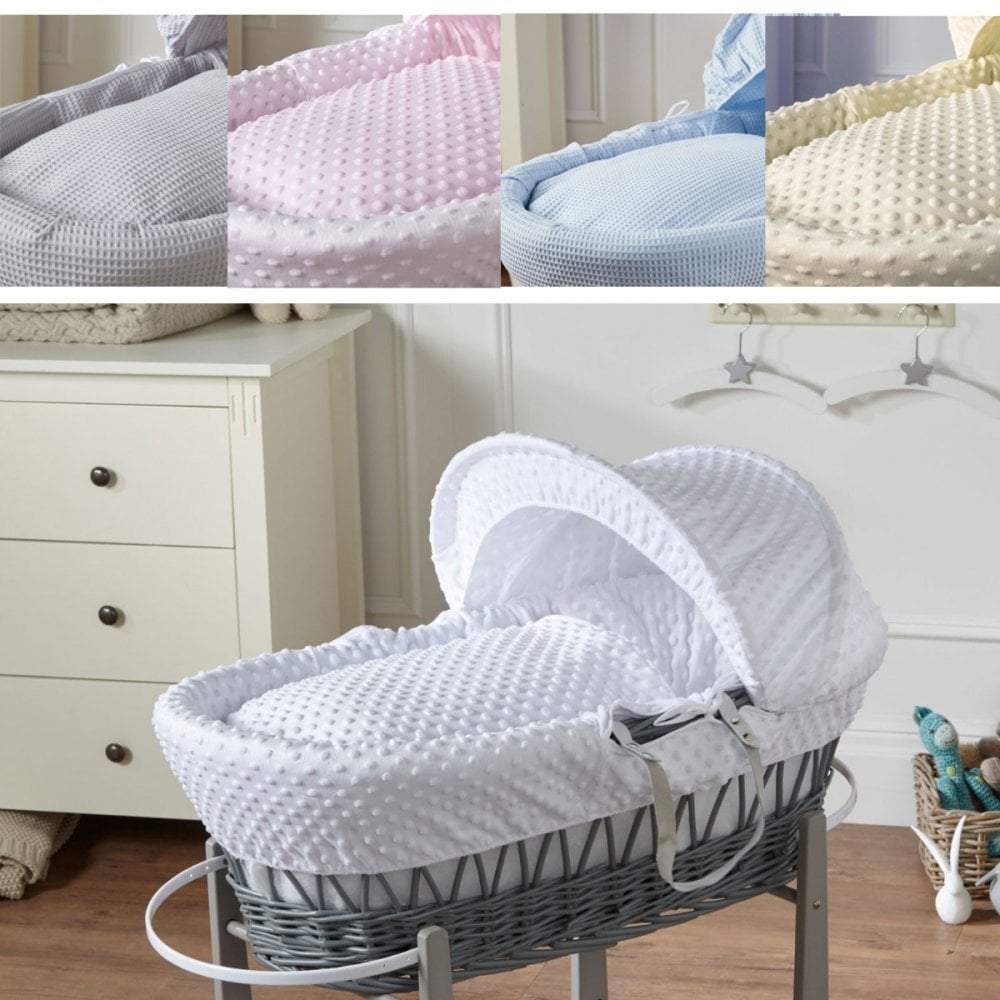
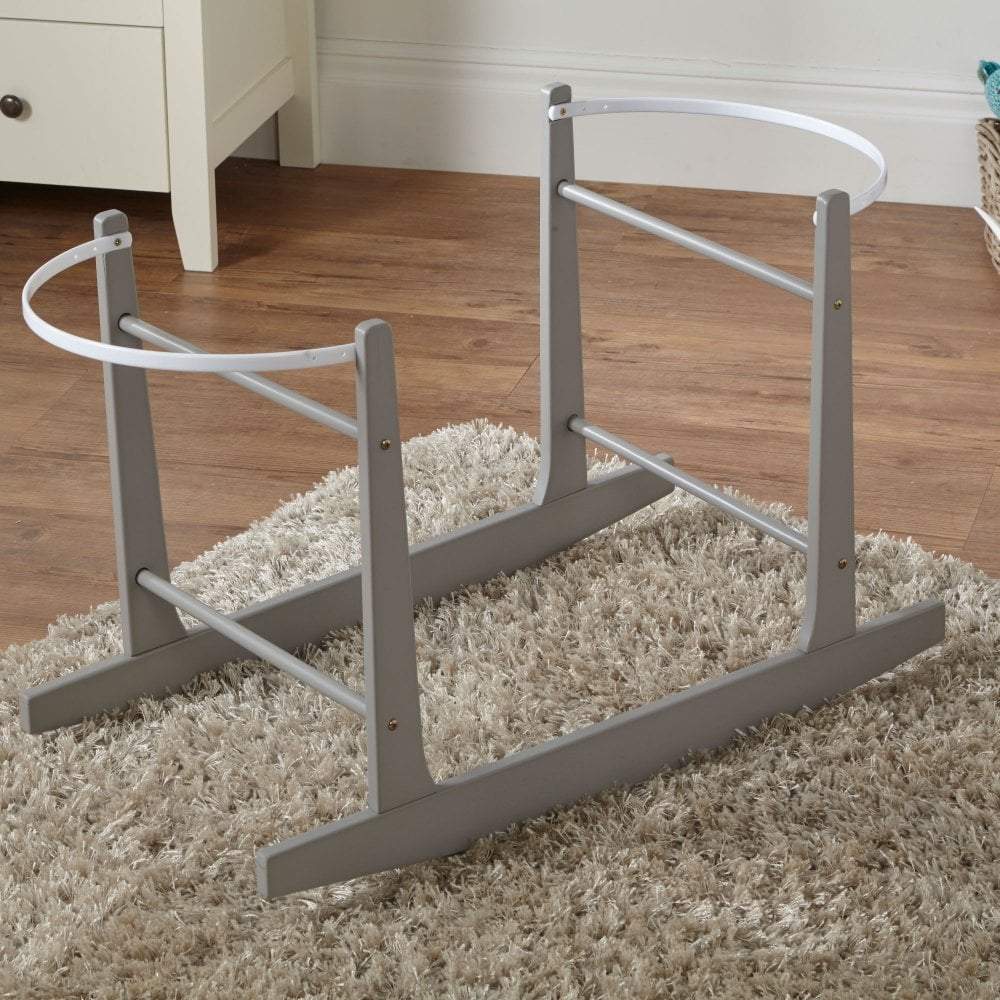
Moses baskets are a popular choice for the newborn stage in the UK, and it's easy to understand why. They're portable, compact, and allow your baby to sleep close to you in almost any room of the house, most come with carry handles and a separate stand, making them straightforward to move between rooms. Traditional wicker and fabric-bodied Moses baskets are lightweight and easy to shift from bedroom to living room and back again throughout the day. Why Parents Are Loving Our Moses Baskets
Safety standards and what to look for
When buying a Moses basket in the UK, look for BS EN 1466:2014 or BS EN 1466:2023 certification on the label. This confirms the basket has met the required safety testing for newborn sleep. The mattress must be firm, flat, and a precise fit within the basket body, with no gaps at the sides where a baby's face could press against the weave. At For Your Little One, our range of wicker and pod Moses baskets is selected to meet current UK safety standards, each product listing includes the relevant standard so you can verify compliance before purchasing.
How long they last and what they cost
Be realistic about the lifespan before you buy. Most babies outgrow a Moses basket between three and four months, or when they reach around 7 to 9kg, whichever comes first. The moment your baby shows signs of rolling, the shallow sides are no longer safe and the transition to a cot or crib should happen immediately, regardless of age, this aligns with NHS and Lullaby Trust guidance on when to move a baby to a larger sleep surface. Bassinets last slightly longer, often up to four to six months.
On price, Moses baskets in the UK range from around £20 at the budget end to just under £160 for premium knitted options with a rocking stand. The portability remains one of their standout practical advantages for families who want baby close during daytime naps in different rooms.
Cots and cribs: the sleep setup built to last
A full-size cot is the longest-lasting separate sleep surface available, often usable from birth right through toddlerhood. For families who'd rather buy once and avoid frequent transitions between different pieces of equipment, a cot is the most cost-effective long-term option. It does require more planning upfront, particularly around where it will fit during the first six months when it needs to be in your room.
UK safety standards and physical checks
Look for BS EN 716-1:2017 on the label when buying a new cot. When inspecting the product physically, run through these checks before purchase:
- Slat spacing no wider than 6.5cm
- No drop-sides
- No decorative cut-outs in the headboard where a baby's head could become trapped
- Corner posts no higher than 2mm
- Top rail at least 66cm above the mattress support at the lowest setting
The mattress should meet BS EN 16890:2017+A1:2021 (as of 2026) and carry fire safety compliance under BS 7177. Avoid using a second-hand mattress unless you can verify the manufacture date, confirm it complies with current standards, and check there are no product recalls, an unverifiable mattress history introduces uncertainty that a new mattress eliminates entirely.
Space requirements and room planning
The main practical limitation of a cot, particularly for families in smaller homes or one-bedroom flats, is size. Cots are significantly larger than Moses baskets or bassinets and need to sit comfortably in the parents' room for the full first six months. As a guide, standard cot dimensions typically run around 120cm x 60cm, though this varies by model, always measure your specific choice against your available space before committing. For families with the room, this is a minor consideration; for those in compact city living, it can be the deciding factor.
Bedside sleepers: the middle ground for feeding convenience
A bedside sleeper, often called a next-to-me crib, is a three-sided cot that attaches securely to the adult bed at the same height. The open side faces the adult mattress, allowing parents to reach their baby, settle them, and pull them in for a feed without fully getting out of bed. This design makes bedside sleepers especially popular with breastfeeding parents and those recovering from a caesarean section, where getting up repeatedly overnight can be physically demanding.
Safety certification and set-up requirements
All bedside cribs sold in the UK must comply with BS EN 1130:2019, which has been mandatory since 2020. This standard specifically prohibits a side that fully drops down. When you set one up, the internal wall must be at least 12cm high in bedside mode and must sit level with the adult mattress, with zero gap between the two surfaces. That gap is the critical risk: any space between the crib's wall and the adult mattress creates a suffocation hazard, and it must never be filled with cushions or rolled blankets as a workaround. Check the straps are correctly tightened by pulling the crib away from the bed before placing your baby in it for the first time.
Who this option suits best
A bedside sleeper is not a universal solution, but for the right family the difference in overnight ease can be significant. It works well where the adult bed is at the right height, most models allow you to adjust this, there's sufficient bedroom space, and at least one parent is waking for regular feeds. The lifespan is comparable to a bassinet, typically up to six months, and many families use it as a bridge between an early Moses basket phase and a full standalone cot. In a cot vs Moses basket comparison, or a bassinet vs bedside sleeper decision, the bedside option often wins for breastfeeding families specifically because of that overnight accessibility. Prices for bedside cribs generally sit around £119 to £149 for well-regarded models, though it's worth checking current listings as prices vary. For tips on choosing the right model, see How to find the best bedside crib | For Your Little One.
Bedsharing: the honest risk picture parents deserve
Many parents end up bedsharing at some point, often unplanned, during an exhausted night feed. Rather than a blanket warning that gets ignored, parents deserve accurate information about what the evidence actually shows, so they can respond well in the moment and make informed decisions going forward. For a clear discussion of the co-sleeping pros and cons, reputable medical sources offer balanced summaries that can help parents weigh the risks and benefits.
What the statistics actually show
The adjusted odds ratio for bedsharing and Sudden Infant Death Syndrome (SIDS) is 3.53, reflecting approximately a fourfold increase in risk compared to using a separate sleep surface in the same room. Around 49% of SIDS cases in research data involved bedsharing with an adult, compared to 12% of control infants. This contrasts sharply with the approximately 50% SIDS reduction associated with room-sharing using a separate surface. Sofa or armchair co-sleeping carries an even greater risk and is never safe, with SIDS odds increasing dramatically compared to even an adult bed; see further discussion of co-sleeping risks for more detail.
When risk is at its highest
Several conditions make bedsharing significantly more dangerous: babies under three months, premature birth or low birthweight, parental smoking (where the odds ratio rises to 13.87), and alcohol or drug use. Soft mattresses and heavy bedding compound the risk further. If a parent falls asleep unexpectedly while feeding, the right response on waking is always to return baby to their own safe sleep space immediately. That one action, done consistently, makes a meaningful difference.
Newborn sleep options compared, choosing what suits your family
The right setup looks different for every family. Any article that tells you there is one objectively correct answer is oversimplifying. The right choice is the one that fits your home, your budget, your feeding approach, and your own sleep needs.
Matching sleep setup to home, budget, and lifestyle
A parent in a one-bedroom flat with limited floor space has genuinely different constraints to one with a dedicated nursery from day one. A family watching their budget may find a cot that lasts three years far better value than a Moses basket used for ten weeks. A parent breastfeeding four times a night may find a bedside sleeper changes their experience more than any other single product. Think through your actual circumstances rather than defaulting to what was most popular in your parent group.
Building in flexibility as your baby grows
Many families use more than one option across the first year: a Moses basket for the early weeks at home, transitioning to a bedside sleeper or cot as the baby approaches three to four months. That approach is entirely sensible and very common. For Your Little One's range of newborn sleep solutions, from wicker and pod Moses baskets to nursery furniture designed for the long term, is a practical starting point. Each product in our sleep range is listed with its relevant UK safety standard, so you can shop with confidence rather than having to cross-reference standards manually. If you're planning to travel with your newborn, our guide Travelling With a Newborn Baby: How to Ensure Safe Sleep covers the core safety considerations on the road.
The bottom line on newborn sleep safety
Every option covered in this newborn sleep options compared guide can be used safely when set up correctly. The factors that matter most are consistent across all of them: room-sharing for the first six months, a firm and completely clear sleep surface, and back-sleeping every single time. Follow NHS and Lullaby Trust guidance on safer sleep on these points and you've already made the most significant contribution to your baby's safety, regardless of which product you choose.
Choosing between newborn sleep arrangements is a personal decision shaped by your home layout, your budget, and how you're feeding your baby. There are, however, clear practices to avoid: sofa co-sleeping, using a second-hand mattress without verifying its compliance and condition, and ignoring manufacturer weight and age limits.
If you're still working out which option fits your family best, For Your Little One's range of safety-certified Moses baskets, bassinets, and nursery sleep essentials is a practical place to start. We've been helping families make exactly this decision since 2011, and we're here to help you find the right fit for your little one.
