



Posted by Dean smith

The nursery is coming together. The cot is assembled, the chest of drawers is stocked, and the changing mat is in place. But one question tends to catch new parents off guard: where does a newborn actually sleep for those first few weeks? A full-sized cot is often too large and too far from the bed, which is why many families look to a Moses basket or a bassinet as a first sleep solution. Both are widely recommended, both are considered safe when used correctly, and both are available from trusted UK retailers including For Your Little One. So, what is better: a Moses basket or a bassinet for a newborn?
The honest answer is that neither is universally the right choice. Each suits a different home layout, sleep routine, and budget, and both can be safe when used in line with NHS and Lullaby Trust guidance, which recommends a firm, flat sleep surface kept clear of soft items. By the time you finish reading, you will know exactly which one fits your situation, with safety facts, practical comparisons, and a clear decision guide to support your choice.
What is better: a Moses basket or a bassinet for a newborn?
What the certification labels tell you
In the UK, Moses baskets and carry cots are covered by BS EN 1466:2023, which sets requirements for structural strength, handle integrity, mattress fit, and suffocation hazard prevention. Bassinets and bedside cribs fall under BS EN 1130:2019, which governs stability, structural integrity, and safe design for freestanding or bedside infant sleep products. These standards set the minimum acceptable threshold, not a guarantee of outstanding quality. A product can meet the standard and still have features you would want to avoid, which is why checking individual product specifications and customer reviews matters just as much as the certification label.
Design features that genuinely reduce risk
When comparing a Moses basket or bassinet for a newborn, certain design details matter far more than aesthetics. A firm, flat mattress is non-negotiable: a surface that does not allow sinking reduces the risk of a baby's face becoming pressed into soft material. Equally important is a stable, wide base or stand. Product recalls during this period have frequently cited tipping, collapse, and slides off unstable stands among the most common reasons for withdrawal from sale, a pattern consistent with themes highlighted by the UK's Office for Product Safety and Standards (OPSS). Breathable sides are the third key feature: if a baby's face contacts the side of the basket during sleep, breathable woven or mesh material reduces the entrapment risk that closed fabric walls can create.
Recalls have also highlighted long ribbons, loose straps, and poorly secured handles as recurring failure points. When you look at any listing, check specifically for decorative ties or loops on the hood or exterior, and look at how the basket connects to its stand. If the product description does not address these details, the customer reviews usually will.
Bassinet vs Moses basket: stability compared
Bassinets are generally more stable by design because they are purpose-built freestanding products constructed around a fixed frame. A Moses basket's stability depends on three variables: the basket itself, the stand it sits on, and the surface beneath the stand. That is not a reason to avoid a Moses basket; it is a reason to buy a quality stand with a wide, tested base and to always place the basket on a firm, flat floor. Both options are safe when used correctly and within the manufacturer's stated limits.
Age and weight limits: how long will each option last?
Moses basket lifespan in practice
Most Moses baskets are designed for use from birth to roughly three to six months, with a maximum weight limit of around 9 kg as specified under BS EN 1466:2023. The calendar date matters less than the developmental milestone: once a baby can roll, push up on their hands and knees, or shows any sign of pulling themselves upright, the basket is no longer safe regardless of age. A strong, early developer may outgrow a Moses basket by four months; a smaller baby may use it comfortably until six months. Follow the product's weight or mobility limit, whichever comes first.
Bassinet lifespan and when it ends
Bassinets carry comparable weight limits, typically in the 7 to 9 kg range, and a similar use window of around four to six months. Some models extend slightly beyond this depending on their design and rated capacity. Age limits for bassinets are frequently misunderstood as strict calendar rules, but like the Moses basket, the limit is developmental. A baby who can push up or roll has outgrown the product, regardless of age or calendar date.
When to move to a cot, and what that looks like
Move to a full-sized cot when your baby hits the product's weight cap, shows signs of increased mobility, or reaches six months, whichever milestone arrives first. Both Moses baskets and bassinets are designed specifically for the newborn stage, and expecting either to function as a longer-term solution is where parents run into difficulties. The transition to a cot is not a setback; it is exactly what these products are designed to lead to.
Portability, space, and night feeds: matching the product to your home
Moving around the home during the day
A Moses basket is lighter, more compact, and genuinely easier to carry between rooms. For families who want the baby close during daytime naps in the kitchen, sitting room, or bedroom, this flexibility is a real advantage. A bassinet on a wheeled stand can be moved, but it is bulkier and better suited to staying in one position rather than travelling through the house several times a day.
Bedside use and night feeds
For overnight feeds, a bassinet or bedside crib placed level with the adult mattress offers a clear practical advantage, particularly for parents who are breastfeeding frequently or recovering from a caesarean section. Reaching the baby without getting fully out of bed reduces the disruption of each feed and makes it easier to resettle both parent and baby quickly. In a very small bedroom, a Moses basket wins on footprint: its compact size fits beside almost any bed without the room feeling overwhelmed.
One caution worth noting: repeatedly moving a sleeping baby in a Moses basket introduces a handling risk that a fixed bassinet avoids. If you use a Moses basket beside the bed overnight, keep it on a firm, level surface and make sure the stand is fully locked and stable before placing the baby in it.
Which setup suits which home
A Moses basket suits smaller spaces and households that want a single product for daytime naps across different rooms as well as overnight use. A bassinet or bedside crib suits parents who prioritise easier overnight access and a more stable, fixed sleep setup. Neither is the wrong choice; they solve different problems.
Cost and lifespan: where your money actually goes
Moses basket price range in the UK
Budget Moses basket sets start at around £40 to £65. Mid-range wicker and pod options, which typically include a better-quality stand and a firmer mattress, run from roughly £80 to £140. Premium designs can reach £450, though at that price point you are generally paying for materials and finish rather than meaningful additional safety features. A £100 Moses basket used across five months works out to about £20 per month, which is a modest figure for a product that handles every nap and night sleep during the most demanding period of early parenthood.
Bassinet and bedside crib pricing
Standard bassinets in the UK typically range from £100 to £200, with bedside crib versions, which include an adjustable height range and a side-access panel, sitting towards the higher end of that range. Most popular UK models offer between five and eight height settings, covering bed mattress heights of roughly 53 cm to 76 cm, so it is worth measuring your own bed height before committing to a specific model. The extra spend over a Moses basket buys structural stability, easier overnight access, and in some cases a slightly longer use window.
How to think about value honestly
Neither product is a long-term investment; both are transitional newborn sleep solutions with a lifespan measured in months. The right question is not which one lasts longer but which one earns its cost through daily convenience in your specific routine. For most first-time parents, a mid-range Moses basket from a reputable retailer, with a firm mattress and a quality stand included, is a strong starting point that covers most situations without overcomplicating the purchase.
Wicker vs pod Moses baskets: understanding what's on the market
What makes a pod Moses basket different
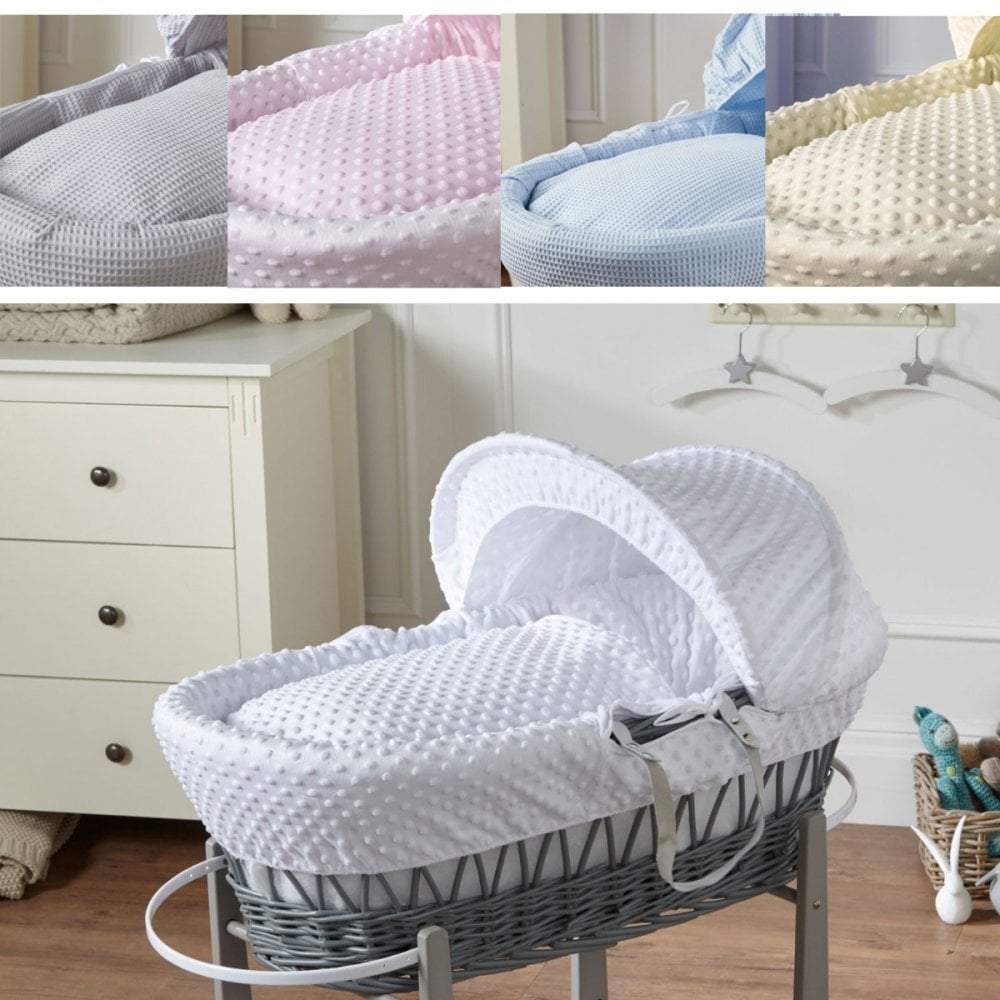
Traditional wicker Moses baskets are woven from natural materials such as wicker or palm leaf. They are lightweight, breathable, and carry a classic aesthetic that suits most nursery styles. The open weave allows natural airflow, which supports safer sleep conditions.
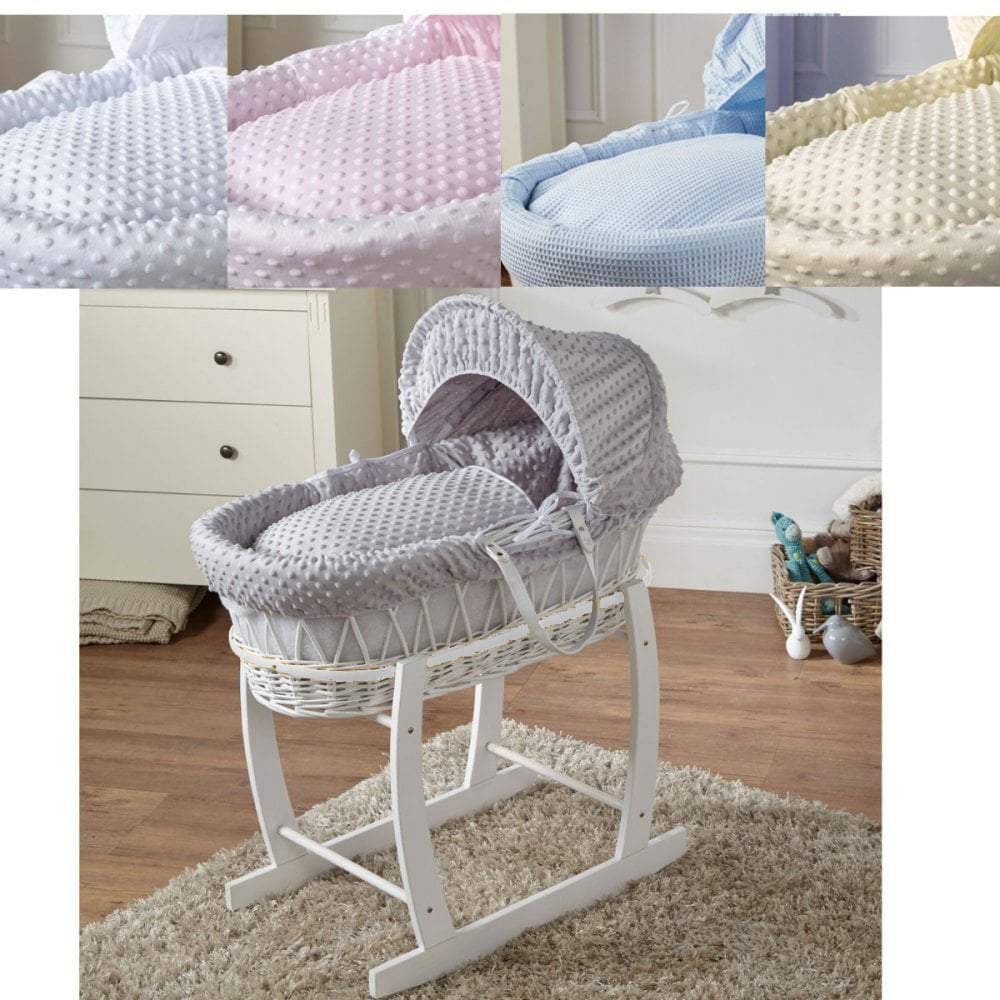
Pod Moses baskets use a more structured oval frame with firmer fabric walls and are generally easier to wipe clean. The pod's construction sits somewhere between a traditional basket and a compact bassinet, retaining the portability of a Moses basket while offering a slightly more structured sleeping space. The choice between them comes down to parent priorities: wicker suits families who value tradition, natural materials, and maximum breathability, while pod suits parents who want a firmer-sided option that is easy to maintain and offers a more contemporary look in the nursery.
Choosing with confidence at For Your Little One
For Your Little One stocks both wicker and pod Moses baskets, with customer reviews from parents who have used each style in real homes. Reading those accounts across both product types in one place removes the guesswork that comes from comparing manufacturer descriptions across multiple websites, for practical tips on selecting finishes and materials, see our guide to Choosing the Perfect Wicker Moses Basket for Your Newborn.
Same-day dispatch on orders placed before 2:30pm and free delivery on orders over £49.99 mean you can sort everything in one place, without trawling several specialist sites. For gift buyers, filtering by customer rating makes it straightforward to identify the best-regarded options without second-guessing the choice. If you want an impartial round-up of top-rated options before deciding, you might also look at expert reviews of the best Moses baskets in the UK.
A practical decision guide: Moses basket or bassinet for a newborn?
For parents in small homes or flats
A Moses basket is the natural fit. It has the smallest footprint of any newborn sleep solution, moves easily between rooms, and comes in at the most accessible price point. Prioritise a stand with a wide, stable base and check that the mattress fits the basket snugly with no gaps around the edges. Those two details address the most common safety concerns in a single product.
For parents prioritising night-feed ease
A bassinet or bedside crib is worth the additional investment, particularly if you are planning to breastfeed frequently overnight or if your recovery from birth means getting in and out of bed repeatedly is difficult. Before buying, measure the height of your own mattress from the floor and compare it against the height adjustment range of the model you are considering. A bedside crib that does not align with your mattress loses its main practical advantage.
For gift buyers and undecided first-timers
A well-reviewed mid-range Moses basket, wicker or pod, is one of the most consistently well-received baby shower gifts. It is practical, needed immediately, and used every day for several months. The decision simplifies to two questions: how much space is available in the bedroom, and how important is overnight accessibility for the parent? The answers point directly to the right product.
- Small bedroom or flat: Moses basket with a quality stand
- Frequent overnight feeds or post-caesarean recovery: bedside crib or bassinet
- Budget-conscious first-time parents: mid-range Moses basket set
- Gift buyers: verified mid-range Moses basket from For Your Little One
The bottom line
So, what is better: a Moses basket or a bassinet for a newborn? Moses baskets win on portability, footprint, and price. Bassinets win on stability and night-feed convenience. Neither is universally the better option; the right choice depends on your home layout, your overnight feeding routine, and your budget. Both can provide a safe, comfortable sleep space for a newborn when used correctly.
Whichever product you choose, the safety essentials remain the same: a firm, flat mattress with no gaps at the edges; a stable stand or base with no risk of tipping; no loose cords, ribbons, or decorative ties; and strict adherence to the product's age and weight limits. The Lullaby Trust recommends placing your baby on their back for every sleep, keeping the sleep space clear of pillows, toys, and loose blankets, and sharing a room for at least the first six months, guidance that applies equally to Moses baskets and bassinets.
If you are ready to choose, browse the Moses basket and bassinet range at For Your Little One, where customer reviews give you an honest picture of how each product performs in real homes. Make the final call with confidence rather than guesswork.
