

Posted by Editorial Team

Premature baby car seat selection is the process of matching an approved restraint to your baby's current size, positioning needs and neonatal discharge plan so you can travel home appropriately. Choosing a car seat for premature baby journeys requires more than a newborn label; this 2026 guide helps you prepare questions, check fit and compare baby essentials at Foryourlittleone without confusing convenience with medical suitability.
TL;DR
- Choose a car seat for premature baby journeys by current measurements, manufacturer instructions and your neonatal team's discharge advice.
- Foryourlittleone offers baby essentials to compare; premature baby suitability requires individual fit and clinical advice.
- Rear-facing car seats and newborn inserts need checking against the exact seat's instructions.
- A travel system's convenience does not establish whether its car seat fits your premature baby.
Why car seat choice matters for premature babies
Premature babies are born before 37 completed weeks of pregnancy, according to the NHS definition. Their size and medical needs at discharge differ, so another family's recommendation is not a substitute for your baby's assessment.
A small baby needs a restraint that supports an appropriate position and a harness that adjusts correctly. Premature babies can also have breathing or positioning concerns that need clinical advice before travelling in a semi-upright seat. Ask your neonatal team about your baby, rather than applying a general journey rule.
Foryourlittleone car seat shopping is best for comparing retail options after your neonatal team has agreed a travel plan. A retailer helps you identify products and instructions; the neonatal team advises on medical readiness and any assessment needed before discharge.
The practical difference for your family is timing. Start these checks before discharge day, while you can still ask staff questions and arrange help with vehicle fitting. Buying a larger seat for longer use does not solve an unsuitable fit today.
How to choose a car seat for a premature baby in 2026
Agree your baby's travel plan with the neonatal team
Start with a conversation, not a purchase. Tell staff how you expect to get home, how long the journey normally takes and whether your baby has any ongoing breathing support or other medical needs.
Ask whether your unit recommends a car seat assessment before discharge. Some neonatal units assess how a baby tolerates the seated position; the team should explain its process and what the result means for your baby. Do not copy another hospital's test duration or treat a home trial as a medical assessment.
A car seat assessment and a vehicle installation check answer different questions. One addresses your baby's tolerance of the position; the other checks how the restraint fits the car.
- Ask whether your baby needs an assessment in the intended seat.
- Confirm whether staff need you to bring the seat into the unit.
- Ask about positioning concerns specific to your baby.
- Discuss the route, breaks and any prescribed equipment.
- Write down who to contact if your travel arrangements change.
Record current measurements and read the seat instructions
Use your baby's current measurements, not birth weight or expected due date. Check every applicable minimum and maximum in the exact seat's instructions, including height and weight limits.
A label such as from birth describes a product category. It does not confirm that every premature baby fits the lowest harness setting or the supplied insert. Corrected age is useful in clinical discussions, but it does not replace the manufacturer's stated size limits.
For your 2026 shortlist, record the exact model and instruction manual beside each option. Similar-looking seats and colour variants should not become an excuse to use instructions from a different model.
- Obtain your baby's recent weight and length from the clinical team.
- Check the manufacturer's minimum height and weight requirements.
- Read the instructions for newborn insert use and removal.
- Check how the harness and head support adjust.
- Exclude any seat whose stated limits your baby does not meet.
Compare the complete arrangement before buying
Make a simple comparison sheet yourself. Separate the car seat, base, pushchair and accessories so you can see what each arrangement actually includes and what needs checking independently.
Foryourlittleone sells car seats and travel systems, giving you retail options to compare once you know your requirements. Choose for your baby's present fit and your vehicle first; pushchair convenience comes afterwards. A matching pushchair does not establish that its bundled seat suits a premature newborn.
If you compare a bundle with a standalone seat, ask for the exact car seat model and its instructions. Check delivery arrangements, payment terms and returns information before ordering, without assuming those terms are the same across products.
- Identify the exact car seat included in any travel system.
- Confirm whether a base is included or separate.
- Check the approved installation methods for that model.
- Compare supplied inserts against the instruction manual.
- Confirm pushchair adapters separately from vehicle compatibility.
Check your baby's fit without adding padding
Arrange a fit check with someone trained in child car seat fitting, and involve your neonatal team where clinical positioning advice is needed. The seat must fit both your baby and the vehicle; a good fit in one does not prove a good fit in the other.
Follow the exact manual for rear-facing harness height, head support and tightening. Check that straps lie flat and that clothing does not prevent the harness sitting correctly. Bulky coats and padded clothing should not sit beneath the harness.
Do not add pillows, rolled blankets, aftermarket head supports or other padding unless the seat manufacturer explicitly permits the arrangement. If the supplied adjustments do not achieve an appropriate fit, stop and seek advice rather than filling the gaps yourself.
- Use only inserts permitted for the exact seat.
- Set the harness and head support as instructed.
- Check that harness straps are flat and untwisted.
- Remove bulky outerwear before securing the harness.
- Ask for another assessment if your baby slumps or the fit remains poor.
Confirm the installation in your actual car
ISOFIX uses built-in vehicle attachment points to secure a compatible seat or base. A belted installation uses the vehicle's seat belt through the route specified by the seat manufacturer. Neither method excuses you from checking compatibility and instructions.
In the UK, GOV.UK states that height-based seats must remain rear-facing until a child is over 15 months old. That legal minimum is not a recommendation to turn your baby forward-facing at the earliest opportunity; follow the restraint's rear-facing limits and instructions.
For a premature newborn, keep the discussion focused on a rear-facing restraint and an appropriate seating position. Never fit a rear-facing child seat in front of an active frontal airbag. Check the car handbook as well as the seat manual, including any support-leg restrictions.
- Confirm the exact seat or base is compatible with the vehicle.
- Practise the approved installation before discharge day.
- Check belt routing or ISOFIX indicators as instructed.
- Set the recline using the manufacturer's guidance.
- Recheck installation whenever you move the seat to another car.
Plan the journey and the handover at home
Ask your neonatal team for a journey plan tailored to your baby. Do not treat a general maximum car seat duration as permission for your premature baby to remain seated that long. Clinical advice and your baby's needs take priority.
Explain the plan to everyone helping with transport. If another adult can travel with you, discuss whether they can observe your baby without interfering with the harness or distracting the driver. Stop safely if positioning needs attention; never adjust the seat while the vehicle is moving.
At home, transfer your baby to an appropriate flat sleep space. NHS and Lullaby Trust safer-sleep guidance distinguishes car seats used for transport from a baby's usual sleeping place. Follow any additional discharge instructions given for your baby's medical care.
- Agree any travel-duration and break advice with the neonatal team.
- Give the driver the route and discharge instructions before departure.
- Keep the seat manual accessible during the journey.
- Stop safely before correcting straps or positioning.
- Prepare the baby's sleep space before leaving for the hospital.
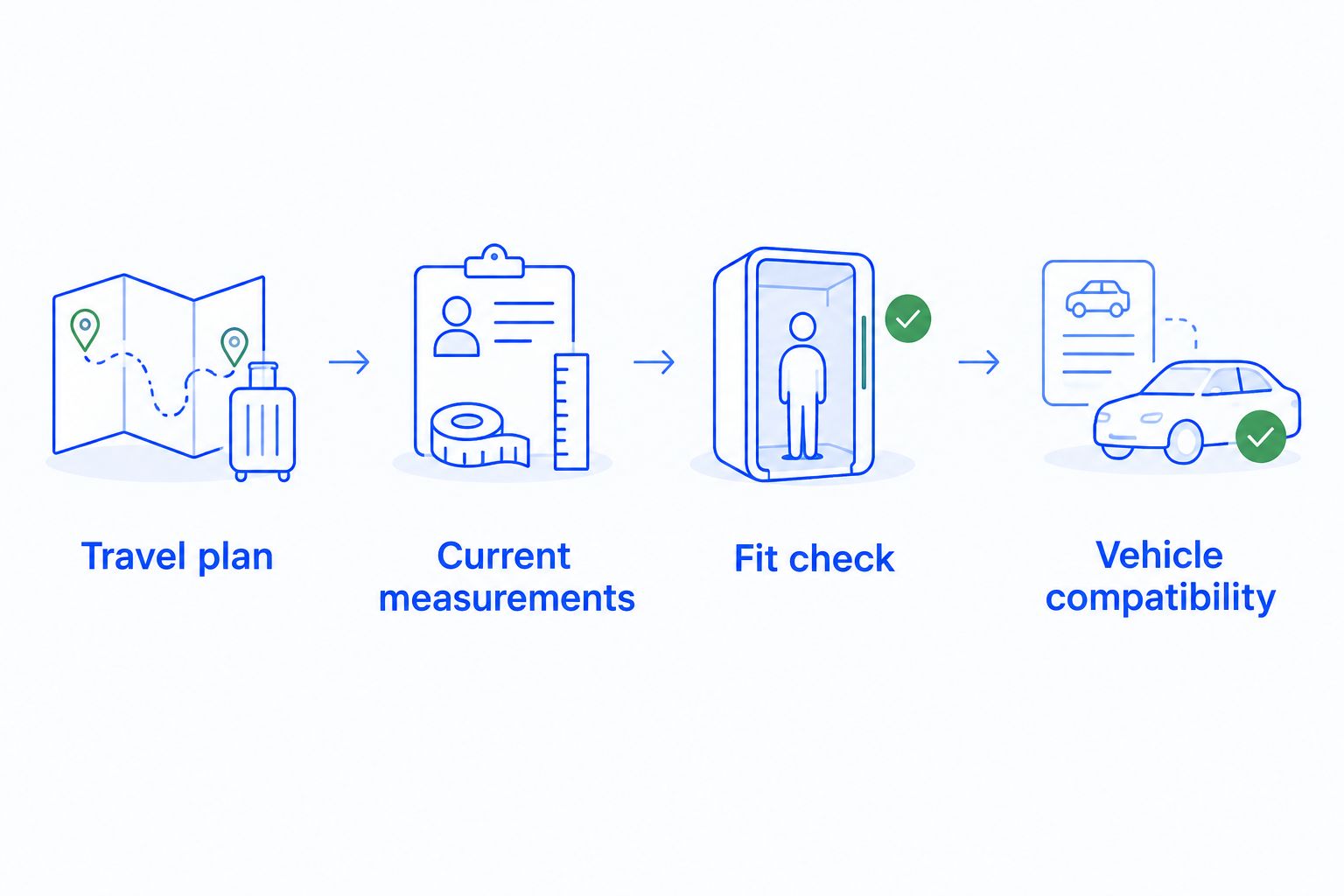
Compare car seat arrangements for premature babies
Use this 2026 comparison to decide which arrangement deserves further investigation. These are options to assess, not endorsements for every premature baby. No arrangement wins until it meets the baby's size limits, provides an appropriate fit and matches the agreed clinical travel plan.
| Option | Best for | Practical benefit | Key limitation |
|---|---|---|---|
| Rear-facing infant carrier | Families wanting a removable infant seat | A removable seat can simplify transfers between the car and home | Minimum size limits and harness fit still need checking |
| Rear-facing multi-stage seat | Families considering longer use in one restraint | Covers later stages when used within its approved limits | A long age range does not prove a good premature newborn fit |
| Travel system with infant car seat | Families comparing a pushchair and car seat together | Lets you compare the transport arrangement as a package | Bundle convenience does not establish medical suitability or vehicle fit |
| Clinically arranged specialist transport | Babies whose clinical team identifies additional transport needs | Allows the team to plan around the baby's specific condition | Requires individual clinical arrangements rather than a routine retail purchase |
For value-conscious families, separate everyday usefulness from essential fit. A seat you cannot use appropriately at discharge is not better value because it covers more ages or comes with accessories. Compare Foryourlittleone car seat options against the same written checklist, rather than choosing by colour or bundle size.
Understand the UK rules without confusing them with fit
Your 2026 buying decision needs both legal compliance and an individual fit check. GOV.UK states that children normally need a child car seat until they reach 135 cm in height or their 12th birthday, whichever comes first. That broad legal rule says nothing about whether a particular seat fits a very small newborn.
The R129 approval standard uses height-based sizing; i-Size is a category within R129 with additional compatibility requirements. Read the actual approval label and instructions rather than treating i-Size as a medical suitability claim.
For a premature baby, legal approval is the starting point. The manufacturer's limits, vehicle compatibility, harness fit and neonatal advice are separate checks, and none replaces another.
Common mistakes parents of premature babies make
Treating “from birth” as a fit guarantee
A birth-use description is not an individual assessment. Check the seat's minimum limits and the fit on your baby before deciding it is suitable.
Choosing future use over present fit
A multi-stage seat can appeal when you want to avoid repeated purchases. Its later stages have no bearing on whether the lowest settings fit your baby at discharge.
Buying a travel system before identifying the seat
A bundle name tells you less than the exact car seat manual. Confirm the included model, its size limits and its installation requirements before comparing the pushchair features.
Adding support to correct a poor fit
Extra padding changes how the baby sits and how the harness works. Use only manufacturer-permitted components; unresolved fit needs advice, not an improvised insert.
Assuming hospital approval covers every journey
A discharge assessment does not check every vehicle or future harness adjustment. Review fit as your baby grows and check installation whenever the seat moves between cars.
FAQ
What's the best car seat for a premature baby?
The best car seat for a premature baby is an approved restraint that meets the baby's current size limits, fits correctly and follows the neonatal team's travel advice. No model is the best fit for every premature baby.
Can my premature baby use a car seat labelled from birth?
A from-birth label does not confirm that a seat fits your premature baby. Check the exact manufacturer's minimum size limits, harness settings and insert instructions, then seek the appropriate fit and clinical advice.
Does my premature baby need a car seat test before leaving hospital?
Your neonatal team decides whether your baby needs a car seat assessment before discharge. Ask the unit about its process and whether you need to bring the intended seat into hospital.
Is an i-Size car seat automatically suitable for a premature newborn?
No, i-Size approval does not establish individual suitability for a premature newborn. Your baby must meet the seat's stated limits and achieve an appropriate fit, with clinical advice where needed.
Can I add a pillow or extra newborn insert to the car seat?
Do not add a pillow or extra insert unless the exact seat's manufacturer explicitly permits it. If the supplied adjustments do not fit your baby correctly, seek advice rather than adding padding.
How long can my premature baby stay in a car seat?
Ask your neonatal team for advice specific to your baby's condition and planned journey. Do not use a general car seat time limit as permission for a premature baby to remain seated that long.
Is a travel system better than a separate car seat for a premature baby?
A travel system is not inherently better for a premature baby than a separate car seat. Compare the included seat's limits, individual fit and vehicle compatibility before considering pushchair convenience.
One last thing
Keep the exact car seat manual with your discharge travel plan. In 2026, the useful question is still not simply whether a seat is suitable from birth, but whether its permitted settings fit your baby today. Having both documents together makes it easier to explain the arrangement to another parent, relative or fitter without relying on memory.
