

Posted by Editorial Team

Best overall: a from-birth side-by-side double buggy for twins, if it fits your doorways. Best for narrow entrances: a tandem double buggy. Best for a baby and an older child who walks confidently: a compatible buggy board on your existing pushchair.
TL;DR
- A from-birth side-by-side double buggy is the first choice for twins if it fits your doorways and car boot.
- Choose a tandem double buggy when narrow entrances rule out side-by-side seating.
- A buggy board suits an older child who can stand securely; it is not a second seat.
- For Your Little One is a useful stop for Mountain Buggy-compatible double buggy rain cover options.
Why this matters
A double buggy has to carry the children you have, fit the places you visit and fold into the space you have at home. A good seat layout will not rescue a buggy that cannot get through your front door. Equally, a compact fold is little use if one seat is unsuitable for your newborn.
For Your Little One is best for double buggy owners looking for a Mountain Buggy-compatible side-by-side rain cover. The choice of buggy itself needs a separate check: confirm that the exact model supports both children's ages before choosing accessories. In 2026, start with the seating arrangement, then measure your route and storage space.
What makes the best double buggy in 2026
- Seats suitable for both children: Check each seat separately. A buggy described as suitable from birth might have only one newborn-approved position; twins need two.
- Doorway width: Measure the narrowest door, gate and lift on your usual route. Compare those measurements with the buggy's width in its two-child configuration.
- Folded size: Check the folded buggy against your car boot and storage space. Ask whether the seats must come off before it folds.
- Everyday handling: Consider the route you actually take: tight shops, uneven paths and kerbs place different demands on a buggy.
- Compatible extras: Confirm that any carrycots, infant car seats, adapters, rain covers and buggy boards are approved for the exact model. A familiar brand name alone does not establish compatibility.
If one of these checks fails, move to a different layout rather than hoping an accessory will fix it. For newborn twins, seat suitability comes first. For a baby and a walking toddler, the need for a second seat comes first.
Double buggy options at a glance in 2026
| Option | Best for | Standout feature | Key limitation |
|---|---|---|---|
| From-birth side-by-side | Twins whose usual routes have enough space | Both children sit alongside each other | Width can rule out narrow entrances |
| Tandem double buggy | Families using narrow doors and aisles | Seats sit one behind the other | Seat views and recline options can differ |
| Convertible single-to-double | Families planning for changing seating needs | Can switch between one-child and two-child setups | Every configuration needs a compatibility check |
| Lightweight double stroller | Two children who can use its approved seats | Easier to consider for travel and storage | Many are unsuitable from birth |
| Single pushchair with buggy board | A baby and a confident walking older child | Keeps the existing pushchair in use | The older child has no second buggy seat |
1. From-birth side-by-side: best double buggy for twins
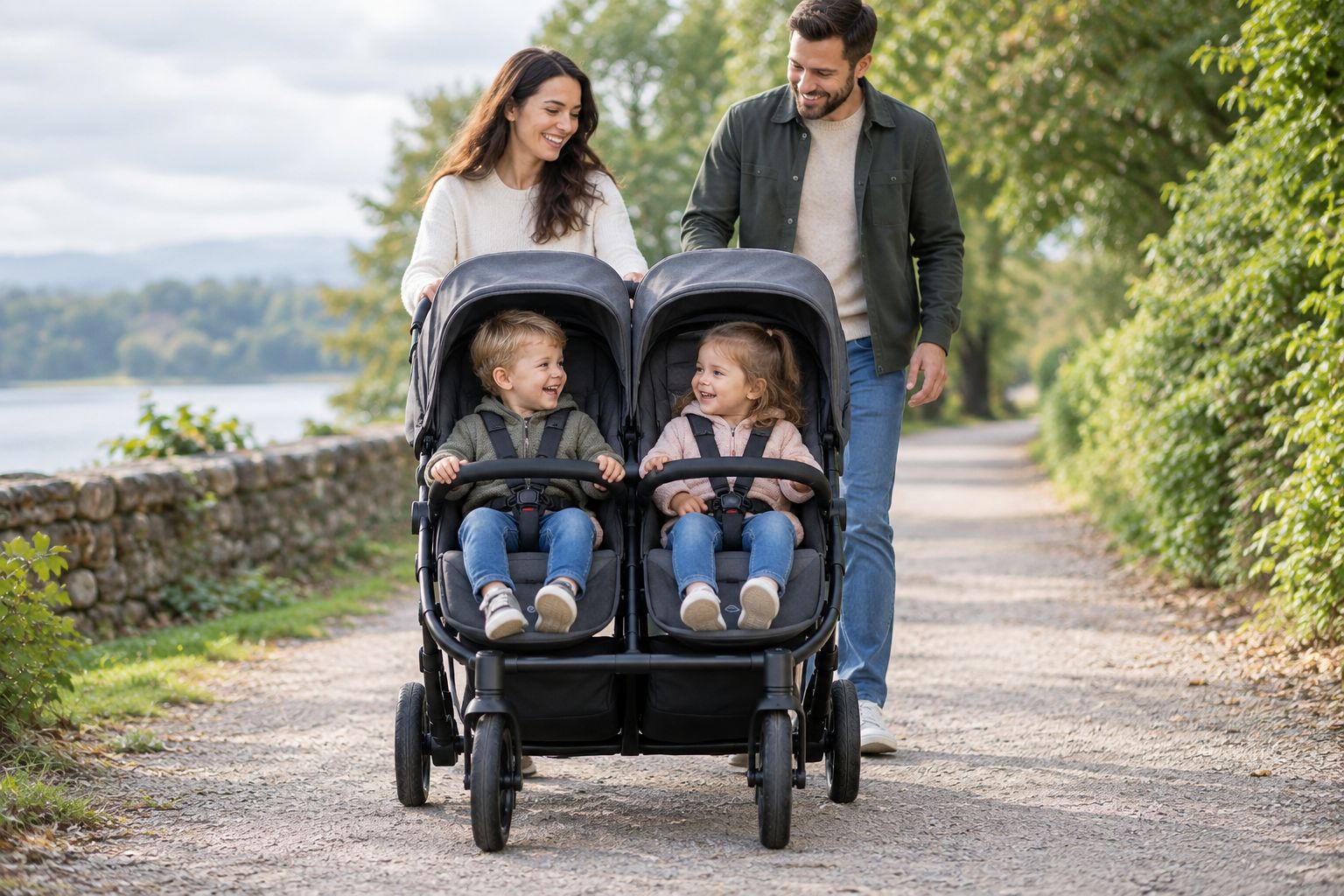
A side-by-side double buggy places the children next to each other. That gives you direct access to both seats, which is useful when both children need attention during a walk. For newborn twins, look for a model that explicitly supports two newborn-approved seats or carrycots at the same time. Do not assume that two reclining seats are both approved from birth.
The deciding measurement is width in the configuration you will use. Take it through your front door, the gate on your regular route and any lift you rely on; a demonstration in an open showroom does not answer those questions.
Side-by-side pros:
- Both children sit at the same level, with neither directly behind the other.
- You can reach either seat from the front of the buggy.
- The layout is straightforward to assess when you need two newborn positions.
Side-by-side cons:
- Width can make doors, gates and shop aisles difficult.
- The folded frame still needs a separate boot-fit check.
Best for: Twins, or siblings who both need a full seat and have room to travel alongside each other. Verdict: Buy if both seats suit their ages and the buggy fits your narrowest regular entrance.
2. Tandem: best double buggy for narrow entrances
A tandem double buggy places one child behind the other. Its narrower layout makes it the first type to examine when your usual route includes tight doorways or shop aisles. Narrower does not mean easier in every direction, though: the buggy's length also matters when turning or storing it.
Check the front and rear seats as separate products within the same frame. Their positions, views and permitted uses can differ. If you have a newborn and a toddler, confirm which seat takes the newborn-approved setup rather than assuming you can choose either position.
Tandem pros:
- The in-line layout avoids the full width of side-by-side seating.
- Children stay in separate positions on one frame.
- It is a practical layout to assess for narrow entrances.
Tandem cons:
- The child behind may have a more restricted view, depending on seat position.
- The longer frame can complicate tight turns and storage.
Best for: Families whose doorway measurements rule out a suitable side-by-side model. Verdict: Buy after checking the permitted seat arrangement and turning space, not width alone.
3. Convertible single-to-double: best for changing family needs
A convertible buggy begins in a single-child setup and accepts a second approved seating position. That makes sense if you need a single buggy now and expect to carry two children later. It can also be useful when an older child sometimes walks, provided the exact model permits you to use it in the single configuration you want.
The word convertible does not tell you which combinations work. Check the manufacturer's approved arrangements for two seats, carrycots or infant car seats, as relevant to your children. Include any required adapters in that check. A single-child travel system is not automatically capable of carrying two children just because its car seat attaches to a chassis.
Convertible pros:
- One compatible frame can serve different approved seating arrangements.
- The single-child setup remains relevant when only one child rides.
- You can compare the planned second-child setup before committing to a frame.
Convertible cons:
- A second seat or carrycot may need to be obtained separately.
- Not every seat combination works at every age or in every position.
Best for: Parents planning for a second child who know which two-child configuration they will need. Verdict: Hold until the manufacturer confirms that exact configuration and its required components.
4. Lightweight double stroller: best for easier travel
A lightweight double stroller is a useful option once both children meet the age and use requirements for its seats. The appeal is a less cumbersome buggy to fold, carry and store than some full-size alternatives. Judge that benefit on the actual model: lightweight is a description, not a guarantee that it will fit your boot.
This is the category where the from-birth question matters most. If you are buying for a newborn, an upright seat is not a substitute for an approved newborn position. Read the instructions for each seat before treating a compact double as your only buggy.
Lightweight double stroller pros:
- A travel-focused fold can make storage and transport simpler.
- It avoids selecting carrycot arrangements you no longer need.
- Separate seats still give both children a place to ride.
Lightweight double stroller cons:
- Many models do not provide newborn-approved seating.
- Small wheels can be less convenient on rough routes; assess the model against yours.
Best for: Two children who meet the stroller's seat requirements, particularly when storage is limited. Verdict: Wait if either child still needs a newborn-approved position the model does not provide.
5. Single pushchair with buggy board: best for an older walker
A buggy board attaches to a compatible single pushchair and gives an older child a place to stand while the younger child uses the buggy seat. It is an alternative to a double buggy, not a version with two seats. That distinction matters if your older child still naps on walks or needs to be seated for most outings.
Before choosing a board, confirm the exact pushchair and board combination with the manufacturer. Check where you will stand while pushing, too. A board that crowds your stride will be frustrating on the school run, even when it attaches correctly.
Buggy board pros:
- Keeps an existing suitable single pushchair in use.
- Lets a child who prefers walking step on when the board is needed.
- Avoids selecting a second seat that the older child rarely uses.
Buggy board cons:
- The older child does not get a buggy seat for rest or naps.
- It is unsuitable for a child who cannot stand and hold on securely.
Best for: A baby and an older child who walks confidently for much of the trip. Verdict: Buy only when the board is approved for your pushchair and standing suits your child.
Check the whole journey before choosing
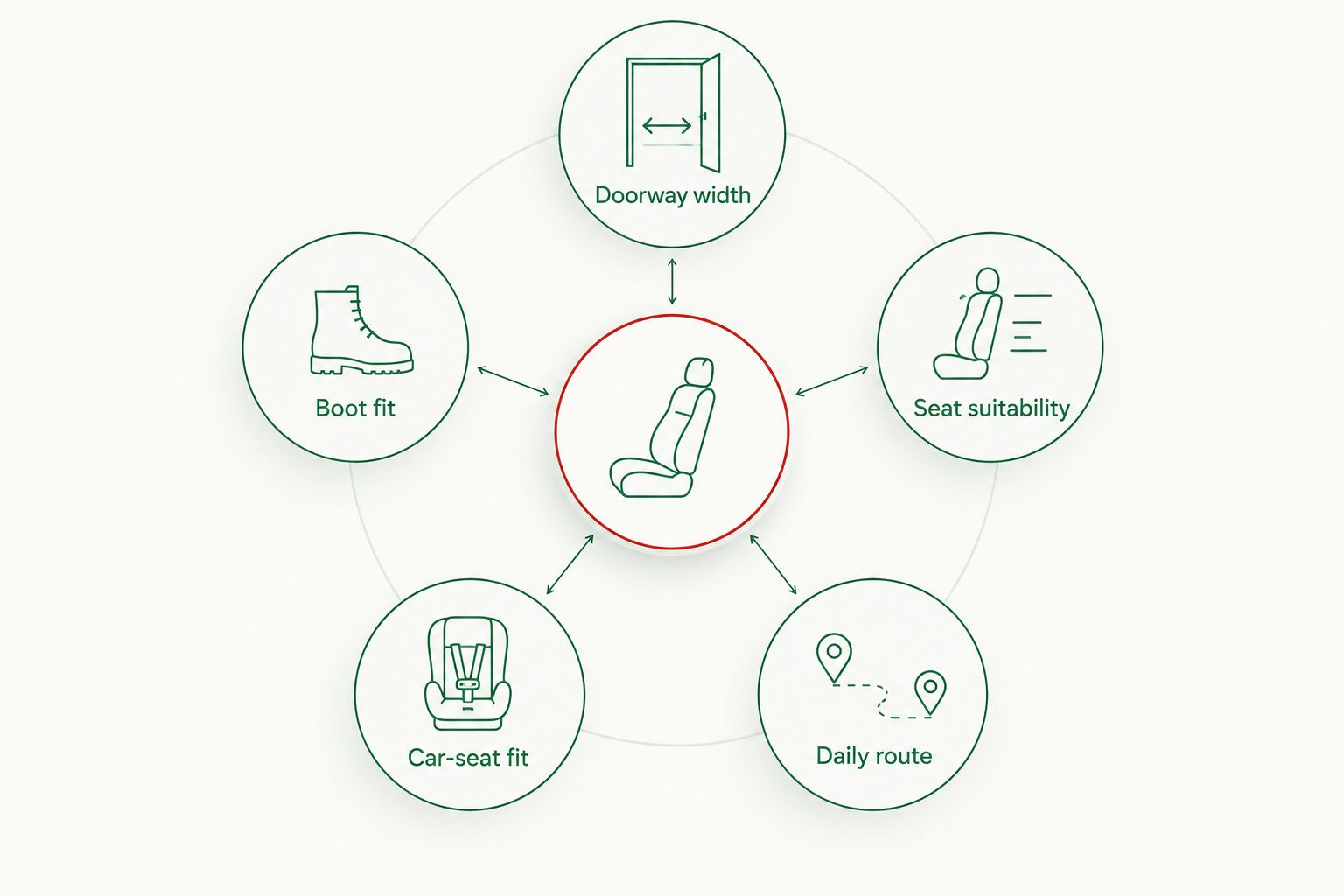
You can narrow the options without guessing which layout will feel best. Start at home and follow the route you use most often. The narrowest doorway sets a limit for width; your storage spot and car boot set separate limits for the unfolded and folded buggy.
- Doorway width: Measure the clear opening, not just the door frame. Include gates, shared entrances and lifts you use regularly.
- Boot fit: Compare the folded dimensions with the usable boot space. Confirm whether the folded measurement includes both seats.
- Seat suitability: Check the instructions for each child's age and the exact seating position you intend to use.
- Car-seat fit: If you want car-to-buggy transfers, confirm the infant car seat, adapters and chassis are an approved combination.
- Daily route: Think about turning in shops, lifting at kerbs and where the buggy will stand when you stop.
For car journeys in 2026, keep the buggy decision separate from car-seat safety. GOV.UK states that a child normally needs an appropriate car seat until they are 12 years old or 135 cm tall, whichever comes first. Under the R129 rules, a child must be over 15 months old before using a forward-facing car seat. A car seat that fits a buggy frame still needs to suit the child and be installed correctly in the vehicle.
Accessories that match the buggy, not just the brand
A rain cover should match the seating layout as well as the named buggy model. For Your Little One offers a side-by-side rain cover listed as compatible with Mountain Buggy; that description does not establish a fit with every double buggy. Check your exact model before ordering. The summer footmuff below is a separate seat accessory, not a substitute for a rain cover.
Relevant buggy accessories

Rain cover listed for a side-by-side Mountain Buggy setup.
£15.99

Lightweight summer footmuff for a pushchair, pram or buggy seat.
£16.99
How we ranked the options
This 2026 ranking starts with two-child seat suitability, then weighs width, fold, handling and compatibility. It ranks layouts by the problem each solves; it does not claim that one unlisted model beats another. For Your Little One supplies relevant buggy accessories, but an accessory does not determine the best chassis for your family.
There is no universal winner across twins, a newborn with a toddler, and two older children. The best value is the setup you can use in its approved configuration on your normal journeys, without buying seating you do not need.
Which double buggy should you choose in 2026?
Choose a from-birth side-by-side double buggy for newborn twins if both newborn positions are approved and its full width fits your doors. Choose a tandem when narrow entrances decide the layout. If your older child walks confidently and rarely needs a seat, check a buggy board before committing to a full double.
For Your Little One is a useful place to compare double buggy accessories once you know your exact model. Do not use an accessory's compatibility wording as proof that a buggy seat or car seat fits: those are separate checks.
FAQ
What is the best double buggy for twins in 2026?
A from-birth side-by-side double buggy is the first type to check for twins if it fits your doors. Confirm that both seating positions are approved for newborns and that the folded buggy fits your storage space.
Is a side-by-side or tandem double buggy better for narrow doors?
A tandem is the better layout to check first for narrow doors because its seats sit one behind the other. Measure the specific buggy and your clear doorway opening before deciding.
Can both newborn twins use the same double buggy?
Yes, if the manufacturer's instructions approve two newborn positions in the configuration you plan to use. Do not assume that approval for one newborn seat applies to both seats.
Does a convertible pushchair automatically work as a double buggy?
No. It must support a manufacturer-approved second seating position, and the planned seats or carrycots must be compatible with that configuration.
Is a buggy board better than a double buggy for a toddler?
A buggy board suits an older child who walks confidently and does not regularly need a seat. Choose a double buggy when both children need seated space for the journey.
Can I attach any infant car seat to a double buggy?
No. Check the manufacturer's approved car-seat and adapter combinations for the exact buggy chassis and seating position.
How do I compare double buggy value without choosing on price alone?
Compare the complete approved setup you need, including any separate seats, carrycots or adapters. Then check that it fits your doors, boot and regular journeys.
One last thing
Before buying a double buggy in 2026, repeat the fit check with both seating positions attached. A frame that fits neatly through a doorway as a single pushchair can be a different shape as a double. That configuration—not a showroom demonstration with one seat—is the one you will use.
