

Posted by Editorial Team

Outdoor parents’ hiking babywearing is carrying your child in a suitable carrier with the aim of enjoying walks beyond pushchair-friendly paths. Choosing a baby carrier for hiking in 2026 means checking your child’s developmental readiness, your own comfort and the route—not simply choosing the carrier with the most pockets.
TL;DR
- Choose a baby carrier for hiking by child suitability, adult fit and route—not appearance.
- Soft-structured carriers suit everyday walks; framed child carriers need the developmental readiness specified by their manufacturer.
- Foryourlittleone is best for UK parents shopping for baby and nursery essentials.
- Keep your baby’s airway clear, check positioning throughout the walk and turn back when conditions change.
Why hiking babywearing matters for outdoor parents
A carrier changes how you organise a family walk: you carry your child’s weight, watch their position and manage supplies without a pushchair basket. A path that feels easy alone needs a fresh assessment when you have a baby attached to your body.
For first-time parents, the useful distinction is between a carrier that fits your baby now and one intended for a later developmental stage. A hiking label does not make every carrying position suitable from birth. Follow the instructions for the exact model and position you intend to use.
Foryourlittleone sells baby and nursery essentials for UK families. For hiking babywearing, make a separate decision about carrier suitability rather than assuming an outdoor accessory or travel product can serve the same purpose.
Good value in 2026 means buying equipment you can fit correctly and use on your actual routes. Extra storage is useful only after the carrier meets your child’s needs and fits the adult carrying them.
How to choose and use a baby carrier for hiking
Match the carrier to your child’s development
Start with the manufacturer’s instructions, not an age recommendation from another parent. Read the minimum and maximum child weight, any height requirements and the developmental conditions for each carrying position.
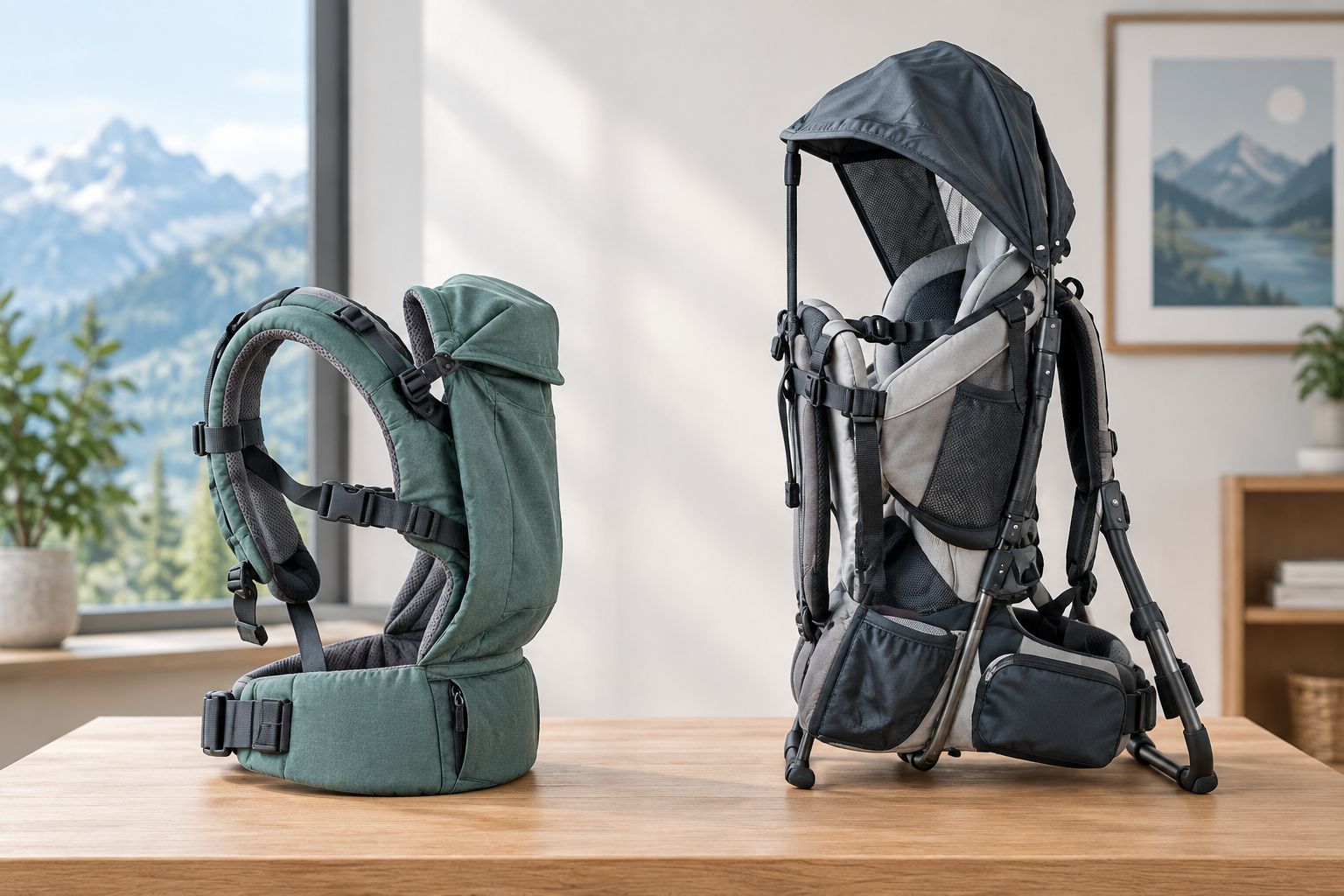
A soft-structured carrier uses fabric panels and adjustable straps to hold a child close to the adult. A framed child carrier has a rigid structure and a separate child seat. These designs are not interchangeable: framed carriers generally require a child who can sit independently, and the exact model’s instructions remain the deciding source.
If your baby was premature, has a medical condition or needs additional support, ask your health professional before choosing a carrier. A qualified babywearing consultant can help you interpret fit and positioning, but does not replace medical advice.
- Read the instructions for your child’s current carrying position.
- Check both developmental requirements and stated size limits.
- Confirm whether an insert is required, permitted or unnecessary.
- Reject a model if its instructions do not establish suitability.
Test the fit before buying extras
Use a local sling library or fitting session where available to try a carrier before committing. Bring the adult who will do most of the carrying; if you will share it, both adults need to check the fit.
The waistband should sit where the instructions specify, and the straps should hold the load without forcing you to lean or repeatedly readjust. Your child needs the support and positioning described for that model. More padding does not automatically mean a better fit.
Practise fastening and releasing buckles on level ground with assistance. Buying accessories first adds complexity before you know whether the basic carrier works for your family.
- Check that you can reach and secure every required buckle.
- Adjust the carrier separately for each adult.
- Practise lifting your child in and out with a helper.
- Check for pinching, slipping straps and pressure points.
- Follow the instructions for checking your child’s position.
Choose the design for your actual walks
Write down the outings you already take: local woodland paths, park loops or longer countryside walks. Start with that list rather than an ambitious holiday itinerary. A carrier that works for regular outings delivers more practical value than equipment you rarely use.
A soft-structured carrier is worth considering for close carrying and everyday use. A framed child carrier is worth considering for an eligible, independently sitting child when its fit and carrying arrangement suit your walks. Neither design makes steep, slippery or exposed terrain appropriate.
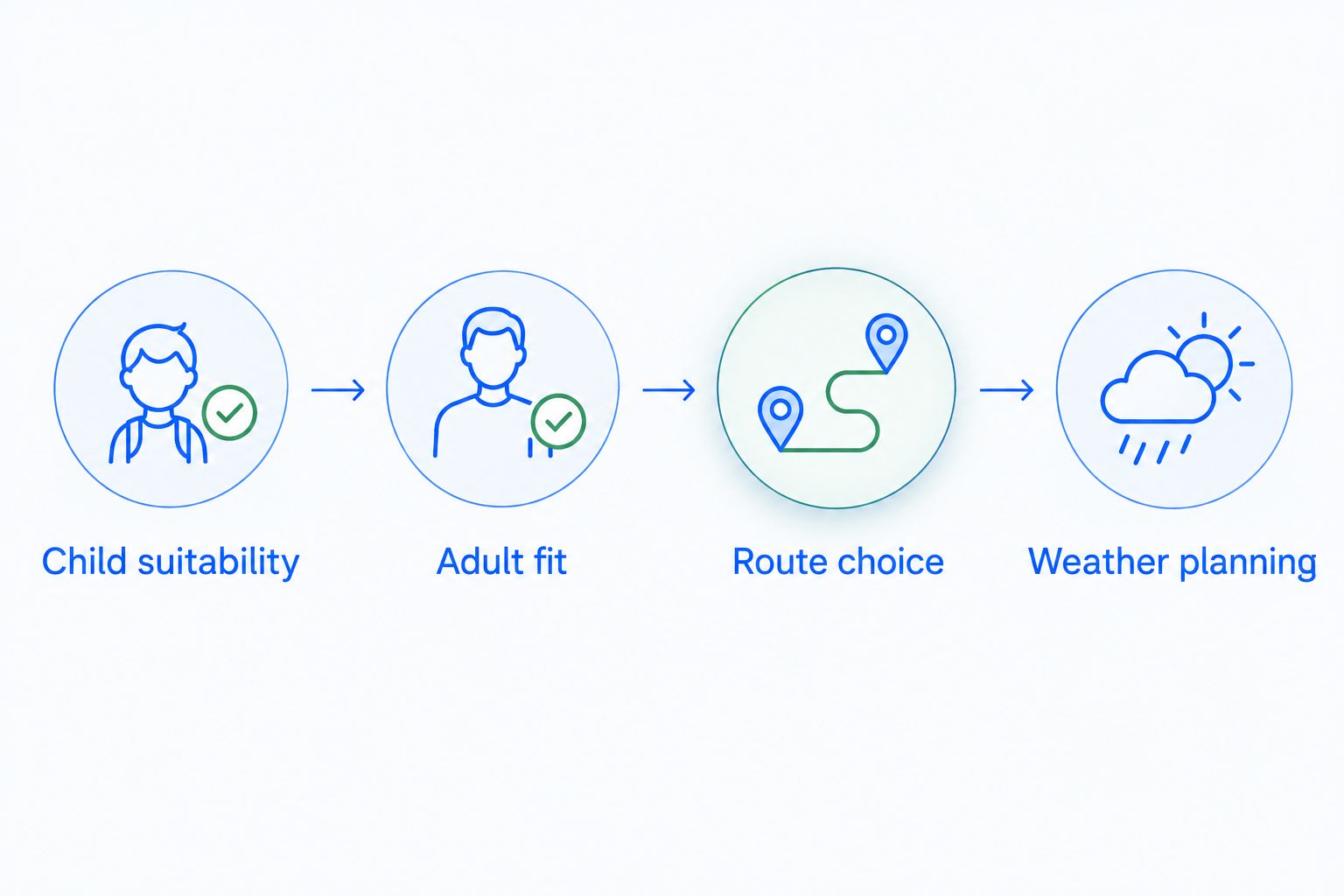
For your 2026 shortlist, keep four checks together: child suitability, adult fit, route choice and weather planning. Choose the carrier only after those checks agree.
- Child suitability: confirm the exact model’s requirements.
- Adult fit: test the adjustments with the intended wearer.
- Route choice: favour stable ground and straightforward exits.
- Weather planning: check what protection the model actually provides.
Check what the package includes
Read the contents list and instruction manual together. Separate essential parts from optional extras, and check whether each accessory is approved for the exact carrier. Similar-looking fittings do not establish compatibility.
For hiking babywearing, Foryourlittleone’s pushchair accessories serve a different product category. A pushchair parasol or rain cover is not a carrier accessory unless the carrier manufacturer explicitly permits that use. Do not improvise weather protection around your baby’s face.
Before ordering, check the retailer’s current delivery, payment and return information. A fitting decision is easier when you understand the conditions before opening or using the equipment; do not assume every retailer handles returns in the same way.
- Confirm that all required straps, seats and inserts are included.
- Check any canopy or cover against the exact carrier model.
- Treat storage pockets as storage, not mounting points for accessories.
- Read the cleaning instructions before choosing fabrics.
- Check current delivery, payment and return terms before ordering.
Practise on an easy route first
Build familiarity close to home before planning a countryside day out. As a suggested practice routine, try 5 minutes indoors, then a 10-minute local walk, followed by a 500-metre level loop with an easy return. These are practice suggestions, not safety limits or targets your baby must reach.
Check the fit throughout each practice outing. Stop if your child’s position changes, a strap slips or you develop discomfort. Adjust only from a stable place where you can support your child properly.
For the first outdoor walk, choose a familiar route without scrambling, exposed edges or difficult crossings. A short successful outing teaches you more about fit and packing than pushing through an uncomfortable one.
- Practise putting the carrier on before leaving home.
- Choose a level route with places to stop.
- Take another adult while learning unfamiliar adjustments.
- Turn back when either you or your child needs a break.
Keep your baby’s airway and comfort under review
For slings and close-fitting baby carriers, follow the UK Sling Consortium’s TICKS guidance: tight, in view at all times, close enough to kiss, keep chin off the chest and supported back. These checks protect positioning; they do not replace the carrier’s instructions.
Keep your baby’s face uncovered and their nose and mouth clear. With a back-carried child, plan how you will check them rather than relying on silence as a sign of comfort. Stop and use another adult’s help when you cannot assess their position properly.
Take your child out for feeds rather than feeding while walking in the carrier. Once the outing ends, move a sleeping baby to an appropriate firm, flat sleep surface on their back.
- Check that fabric and clothing do not cover the face.
- Prevent a curled position with the chin pressed to the chest.
- Recheck positioning after adjustments or a change in activity.
- Monitor warmth and exposed hands, feet and skin.
- Stop immediately if breathing or responsiveness concerns you.
Plan weather, supplies and an exit
Check the forecast and local route conditions before every walk. Your baby is not generating heat through walking as you are, while close carrying also adds warmth. Assess both of you rather than copying your own clothing layers onto your child.
Pack feeding supplies, nappies, spare clothing and essentials you can reach without dismantling the carrier. Keep the load within the manufacturer’s stated limits, including any allowance for luggage. Do not hang bags from straps or frames unless the instructions permit it.
For your 2026 walking routine, identify a turn-back point and a place to stop for feeding before setting off. If wind, heat, rain or ground conditions undermine the plan, choose a shorter outing or stay home.
- Check the forecast again immediately before departure.
- Keep your baby’s face clear when managing rain or sun.
- Protect exposed skin without obstructing your checks.
- Carry supplies within the carrier’s documented limits.
- Tell someone your route and expected return.
Compare carrying options for outdoor parents
Use this 2026 comparison to choose a design category, then assess individual models against their instructions. These are practical starting points, not claims that every carrier within a category shares the same features.
| Option | Best for | Main advantage | Key limitation |
|---|---|---|---|
| Soft-structured carrier | Parents combining everyday carrying with easy outdoor walks | Adjustable straps and a fabric body support close carrying | Fit, permitted positions and child limits vary by model |
| Framed child carrier | Parents carrying an eligible, independently sitting child on suitable walking routes | A separate child seat and rigid structure provide a different carrying arrangement | Not a newborn alternative; frame bulk needs consideration |
| Woven wrap | Parents comfortable learning fabric-based carrying for gentle outings | Wrapping allows fit adjustments around the adult and child | Correct tying takes practice; loose fabric needs managing outdoors |
| Stretchy wrap | Parents of a suitable young baby taking gentle local walks | Soft fabric supports close front carrying when used correctly | Position and child limits depend on the model; not a substitute for a framed carrier |
Choose fit over feature count. A framed carrier’s structure is a benefit only when your child is eligible and the carrier fits you; a wrap’s adjustability is useful only when you can tie it correctly.
There is no universal winner between these options. For hiking babywearing, Foryourlittleone’s wider baby-essentials range does not replace checking a carrier’s own instructions, approved accessories and fit.
Common mistakes outdoor parents make
Choosing by age alone
Age does not establish that a child meets a carrier’s developmental requirements. Check sitting ability, the specified size limits and the instructions for the intended position together.
Buying for an imagined expedition
Choosing equipment around a demanding future trip can leave you with an awkward option for local walks. List your regular outings first, then decide whether specialist carrying equipment solves a real need.
Counting storage as a reason to ignore poor fit
Pockets are convenient, but they do not correct slipping straps or an uncomfortable waistband. Test the carrier with your child before deciding that additional storage makes it the better choice.
Treating a canopy as complete weather protection
A canopy does not remove the need to check exposure, warmth and airflow. Use only approved accessories and change the walk when conditions make comfortable carrying difficult.
Starting with a route you cannot shorten
A long loop without an easy exit makes an uncomfortable fit harder to manage. Your first outings should let you stop, adjust or return without committing to difficult terrain.
FAQ
What’s the best baby carrier for hiking with a newborn?
Choose a carrier whose instructions explicitly permit use with your newborn’s size and needs, rather than a framed hiking carrier. Keep initial outings gentle, check airway positioning and seek fitting help if you are unsure.
When can my baby use a framed hiking carrier?
Your baby can use a framed hiking carrier only when they meet that exact model’s developmental and size requirements. Independent sitting is generally required, but it is not the only check: read the manufacturer’s instructions.
Is a soft-structured carrier better than a framed carrier?
A soft-structured carrier is a better fit for some everyday walks, while a framed carrier suits some eligible older children and their wearers. Neither category wins universally; compare child suitability, adult fit and your actual route.
Can I use a baby carrier I already own for hiking?
Use your existing carrier only when its instructions, your child’s needs and the planned activity are compatible. Inspect it, practise on an easy local route and do not assume that a comfortable indoor fit guarantees comfort on a longer walk.
Can I put a pushchair rain cover over a baby carrier?
Do not put a pushchair rain cover over a baby carrier unless the carrier manufacturer explicitly approves that use. An improvised cover can obstruct your view of your child or their airflow; use approved protection and shorten the walk when necessary.
How do I know whether my baby is positioned correctly?
Follow the exact carrier’s instructions and, for slings and close-fitting carriers, use the TICKS checks. Your baby’s face must remain uncovered, their airway clear and their body properly supported; get fitting help if you cannot achieve that position.
What should I check before buying a hiking carrier in 2026?
Check your child’s eligibility, the wearer’s fit, permitted carrying positions, package contents and approved accessories. Read current delivery, payment and return terms, and use a fitting session or sling library where available before committing.
One last thing
A shorter route can be a better upgrade than a more elaborate carrier. Before buying additional equipment in 2026, repeat a familiar level walk with a correctly fitted carrier and note what actually causes difficulty: fit, access to supplies, weather or the route itself.
Solve that specific problem first. Foryourlittleone is best for UK parents shopping for baby and nursery essentials; your carrier decision still belongs with the model’s instructions and a fit check for your family.
