

Posted by Editorial Team

Choosing between a muslin swaddle, a cellular blanket and a TOG-rated sleeping bag decides how a newborn sleeps safely and comfortably through 2026 — this guide ranks the six main types of baby blankets by what each one actually does, not by which packaging looks nicest on a shelf.
TL;DR
- Muslin swaddle blankets are the best all-round baby blankets for newborns in 2026 — breathable, multi-use, dry fast.
- TOG-rated sleeping bags are the safest option for cot and moses basket sleep, replacing loose blankets entirely.
- Fleece pram blankets suit outdoor naps in cold weather but overheat a baby indoors.
- Knitted keepsake blankets are for gifting and photos, not unsupervised newborn sleep.
- Most UK parents need two or three muslin blankets plus one correctly sized sleeping bag to cover the first year.
The short answer: for most newborns, start with muslin swaddle blankets for daytime use and a TOG-rated sleeping bag for cot sleep, then add a fleece pram blanket once the weather turns. Everything else on this list earns a narrower job.
Why this matters
A baby blanket sounds like a simple purchase until you're standing in the nursery aisle at 2am trying to work out whether the one in your hand is safe for a moses basket, warm enough for a pram walk in January, or just decorative. For Your Little One stocks the nursery and sleep essentials that sit around this decision — moses baskets, cot bedding, pram accessories — so it's worth being clear on what each blanket type is actually for before you buy three of the wrong one.
The categories below aren't interchangeable. A blanket that's perfect draped over a pram hood in November can be entirely wrong left loose in a cot at three months old. Getting the type right matters more than getting the softest one.
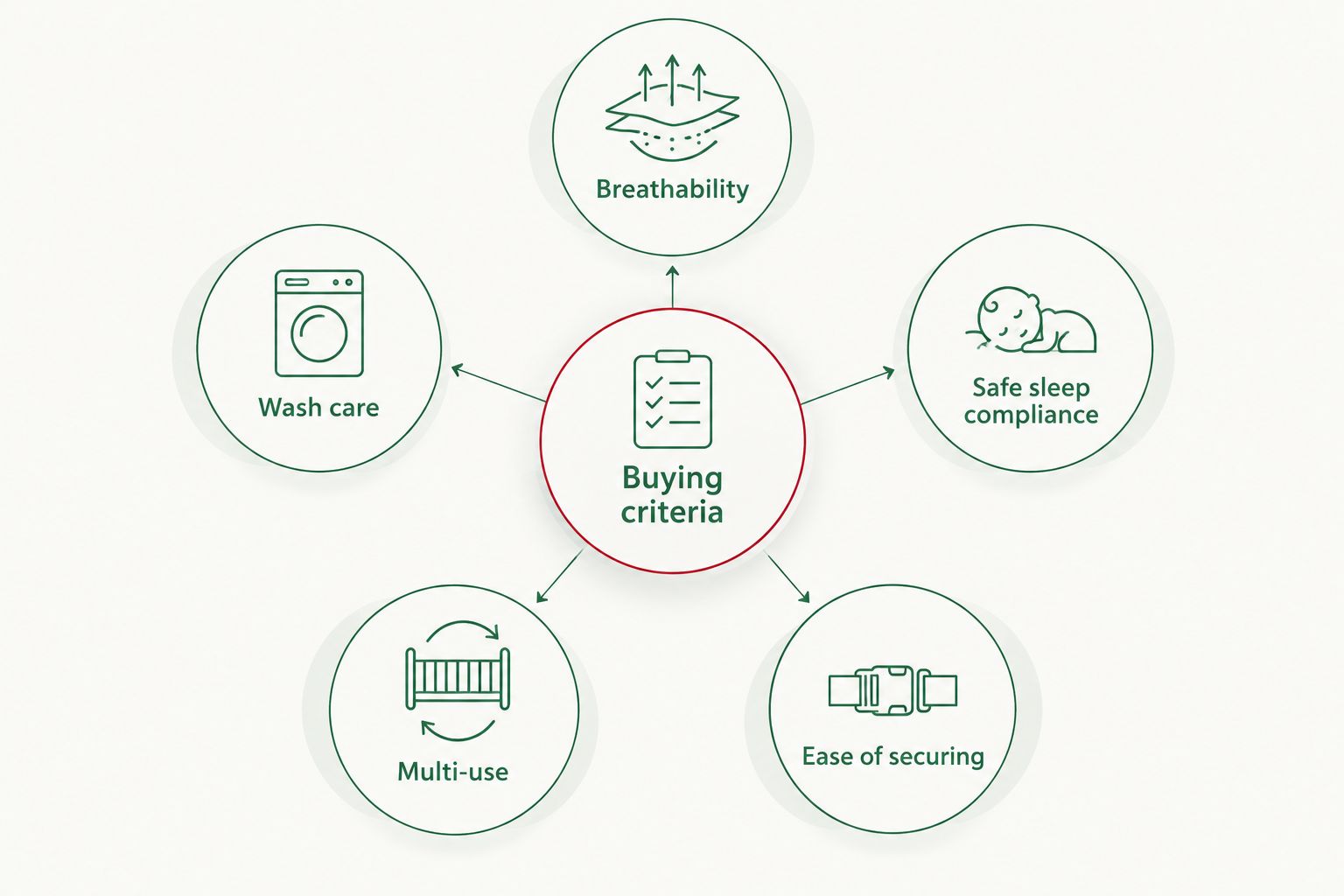
What makes the best baby blanket
- Breathability and fabric weight — natural fibres like brushed cotton or muslin regulate a newborn's temperature better than synthetic fleece indoors
- Multi-use flexibility — the best newborn blankets double as a pram shade, feeding cover or changing mat liner
- Wash care — newborns go through several outfit and blanket changes a day, so quick-drying, machine-washable fabric matters
- Safe sleep compliance — anything intended for use inside a cot or moses basket needs to follow current safe sleep guidance, not just look cosy
- Ease of securing — poppers, zips or wrap-style closures reduce the chance of loose fabric shifting during the night
- Purpose fit — a gifting blanket and a sleep blanket are not the same product, even when they're sold in the same aisle
At a glance: baby blanket types compared
| Type | Best for | Standout feature | Key limitation |
|---|---|---|---|
| Muslin swaddle blanket | Newborn use overall | Lightweight, breathable, dries fast | Not for loose use inside a cot |
| Cellular blanket | Temperature layering | Open weave traps warmth without overheating | Bulkier to fold than muslin |
| TOG-rated sleeping bag | Cot and moses basket sleep | No loose fabric near the face | Needs resizing as baby grows |
| Fleece pram blanket | Pram and outdoor naps | Wind resistant, holds heat outdoors | Too warm for indoor cot use |
| Knitted keepsake blanket | Gifting and photos | Soft, decorative, often heirloom quality | Not suitable for unsupervised sleep |
| Cotton jersey cot blanket | Everyday home layering | Stretch fabric, gentle on skin | Less warmth than fleece in cold snaps |
1. Muslin swaddle blankets: best baby blanket for newborn use overall
Muslin blankets are the loosely woven cotton squares most UK parents leave hospital with, and they earn the top spot because they do more jobs than any other type on this list. Wrap a newborn, drape one over the pram hood, use it as a burp cloth — the same square covers all three without needing a wash in between.
Muslin swaddle blanket pros:
- Lightweight enough to avoid overheating in a centrally heated UK home
- Dries within a few hours, useful when newborns need several changes a day
- Doubles as a pram shade, feeding cover and changing mat liner
Muslin swaddle blanket cons:
- Not warm enough alone in a cold nursery without a base layer
- Should never be left loose inside a moses basket or cot, in line with current safe sleep guidance
Best for: newborns aged 0-3 months at home and out in the pram. Verdict: Buy.
2. Cellular blankets: best baby blanket for temperature layering
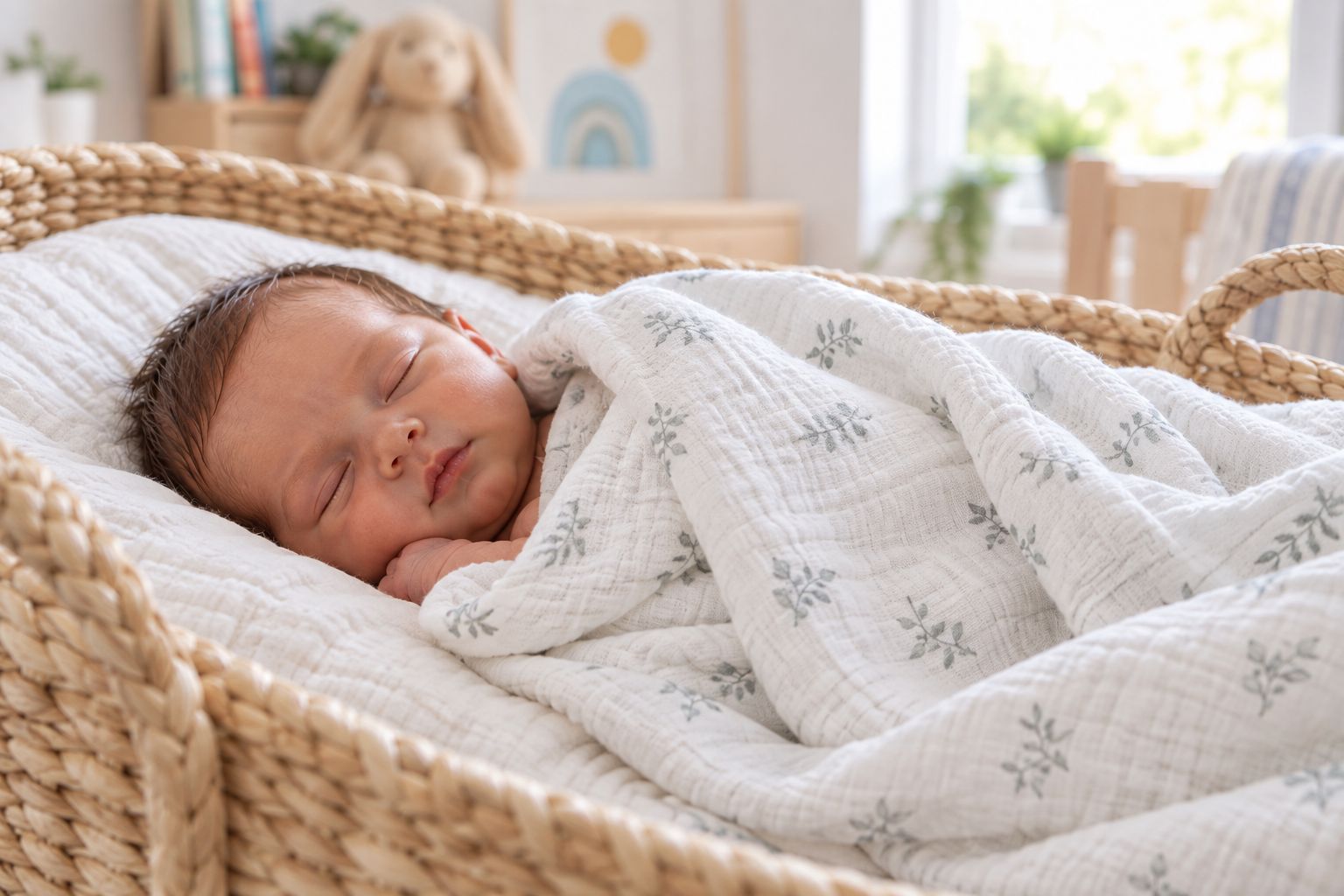
Cellular blankets are the open-weave cotton blankets long used across UK hospitals and nurseries, designed to be added or removed in layers as the room temperature shifts. The honeycomb weave traps warm air without the fabric itself getting too hot to touch.
Cellular blanket pros:
- Layering flexibility — add or remove one without a full outfit change
- Breathable open weave suited to changeable UK weather
- Widely available in cot-bed sizes for moses baskets and cots
Cellular blanket cons:
- Bulkier to fold into a changing bag than a muslin square
- Still counts as loose bedding, so the same under-12-months caution applies inside the cot
Best for: parents building a layering system rather than relying on one blanket. Verdict: Buy.
3. TOG-rated sleeping bags: best baby blanket alternative for safe cot sleep
A TOG-rated sleeping bag isn't technically a blanket, but it solves the exact problem a blanket creates in a cot: loose fabric near a sleeping baby's face. TOG is the warmth rating used across the UK nursery industry — roughly 0.5 for hot summer nights and 2.5 for a standard-temperature room — so you pick the bag by room temperature rather than guesswork.
TOG-rated sleeping bag pros:
- Removes loose blanket risk from cot and moses basket sleep entirely
- TOG labelling takes the guesswork out of dressing for room temperature
- Zip or popper openings speed up night changes
TOG-rated sleeping bag cons:
- Needs resizing every few months as a baby grows through length ranges
- Doesn't work the same way a blanket does over a car seat or pram seat unit
Paired with a Wicker Baby Moses Basket, a correctly TOG-rated bag is the more straightforward route to safe sleep than trying to manage loose blankets by hand each night.
Best for: any parent following current safe sleep guidance through the first year. Verdict: Buy.
4. Fleece pram blankets: best baby blanket for pram and outdoor use
Fleece holds heat and resists wind, which is exactly what a baby needs on a cold pram walk and exactly what they don't need indoors. These blankets clip or tuck around the pram seat rather than being left loose, which keeps them in place during a walk.
Fleece pram blanket pros:
- Keeps a napping baby warm on cold outdoor walks
- Holds up to repeated outdoor use without needing a wash between every trip
- Works across most travel systems and car seats
Fleece pram blanket cons:
- Too warm for indoor cot use in a heated home
- Synthetic fleece can cause overheating if the house is already warm
Best for: pram and buggy naps through a UK autumn or winter. Verdict: Buy for outdoor use, skip for indoor cot sleep.
5. Knitted keepsake blankets: best baby blanket for gifting and photos
Cable knit and crochet blankets are the ones bought as gifts — christenings, baby showers, first photos. They're heavier and more decorative than a functional sleep blanket, and that's the point: they're not trying to solve a sleep problem.
Knitted keepsake blanket pros:
- Decorative, often given as a gift and kept as a memento
- Doubles as a nursery throw once a baby has outgrown swaddling
- Works well for supervised tummy time and photos
Knitted keepsake blanket cons:
- Open knit holes and loose yarn aren't appropriate for unsupervised sleep
- Heavier weight can overheat a newborn faster than a woven cotton blanket
Best for: gifting, photography and supervised floor time only. Verdict: Hold — lovely to own, not a sleep blanket for the first year.
6. Cotton jersey cot blankets: best baby blanket for everyday layering at home
Jersey blankets use the same stretch cotton as a good babygrow, which is why they sit gently against newborn skin. They're a lighter option than fleece, aimed at supervised daytime naps or as an extra layer over a sleeping bag when a nursery runs cold.
Cotton jersey cot blanket pros:
- Soft against sensitive newborn skin
- Machine washable and quick to dry
- An affordable way to add one light layer
Cotton jersey cot blanket cons:
- Less warmth than fleece during a genuine cold snap
- Same loose-blanket caution applies inside the cot for babies under 12 months
Best for: supervised daytime naps and warm-weather layering. Verdict: Buy for daytime use.
How this list was ranked
Each type was weighed against the criteria above: breathability, multi-use flexibility, wash care, and — most heavily — how well it fits current safe sleep guidance for a baby under 12 months. That's why sleeping bags outrank knitted blankets despite knitted blankets often costing more: fit for purpose beat decoration every time in this ranking.
Which baby blanket should you choose?
For most newborns heading into 2026, two or three muslin swaddle blankets cover daytime use, a correctly TOG-rated sleeping bag covers cot and moses basket sleep, and a fleece pram blanket covers outdoor naps once the temperature drops. Knitted blankets and jersey throws are worth owning, but they sit alongside that core set rather than replacing it.
If you're only buying one thing today, make it the sleeping bag — it's the single item on this list that removes a loose-blanket decision from every night of the first year.
FAQ
What's the best baby blanket for a newborn?
Muslin swaddle blankets are the best all-round baby blanket for newborns because they're breathable, multi-use and dry fast between changes. For cot and moses basket sleep specifically, a TOG-rated sleeping bag is the safer choice over any loose blanket.
Are muslin blankets warm enough for winter?
On their own, no — muslin is lightweight and designed for breathability rather than heavy warmth. In winter, pair a muslin swaddle for daytime use with a higher-TOG sleeping bag for sleep and a fleece blanket for pram outings.
Can I use a blanket in a moses basket?
Loose blankets aren't recommended inside a moses basket for babies under 12 months under current UK safe sleep guidance. A TOG-rated sleeping bag achieves the same warmth without loose fabric near the baby's face.
What TOG should a newborn sleeping bag be?
TOG should match room temperature rather than a fixed age — roughly 0.5 TOG suits a warm summer room and 2.5 TOG suits a standard heated nursery. NHS safer sleep advice recommends keeping a baby's room between 16°C and 20°C, so check the thermometer before choosing the bag.
Is a cellular blanket better than a fleece blanket?
Cellular blankets suit indoor layering because the open weave breathes; fleece suits outdoor pram use because it holds heat and blocks wind. They're built for different jobs rather than one beating the other outright.
How many baby blankets do I need for a newborn?
Most parents get through two or three muslin swaddle blankets a day in the first months, plus one or two correctly sized sleeping bags to cover growth spurts. A single fleece pram blanket usually lasts through a whole autumn or winter.
Are knitted blankets safe for babies?
Knitted blankets are fine for supervised use, photos and gifting, but the open stitch and heavier weight make them unsuitable for unsupervised sleep in a cot or moses basket. Keep them for daytime use with an adult present.
What size blanket fits a moses basket?
Moses basket bedding is typically sized smaller than a full cot blanket, so check the basket's own dimensions before buying rather than assuming a standard cot blanket will fit. A correctly sized TOG-rated sleeping bag sidesteps the sizing question for sleep entirely.
One last thing
NHS safer sleep guidance points to room temperature, not extra blankets, as the main lever for keeping a newborn comfortable overnight — 16°C to 20°C is the range worth checking with a thermometer before you reach for another layer. A £5 room thermometer solves more overheating worry in 2026 than any single blanket on this list.
